OutSystems Developer Cloud (ODC)
This content is for the 0.2 version. Switch to the latest version for up-to-date documentation.
Forge component
Section titled “Forge component”In ODC Studio, install the OutSystems Astro Islands Forge component.
Building a separate library
Section titled “Building a separate library”This is the recommended approach. It allows isolation of your library in a separate module/application. It allows better reusability across other apps in your OutSystems instance.
-
Click the Create button and choose Library from the dropdown.
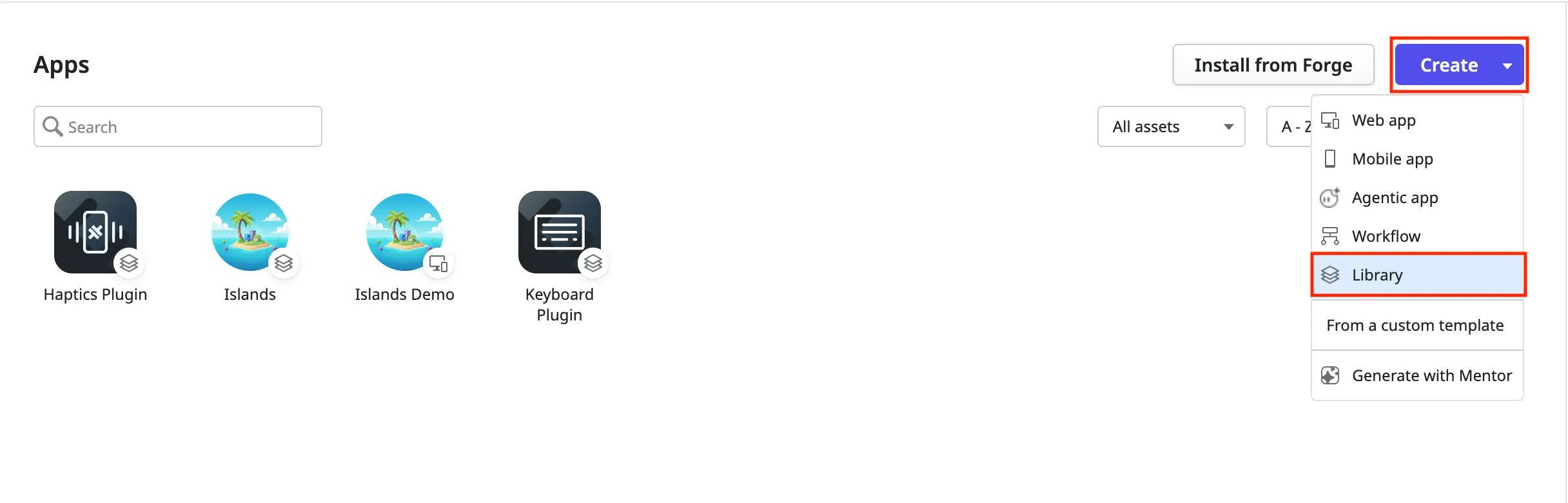
-
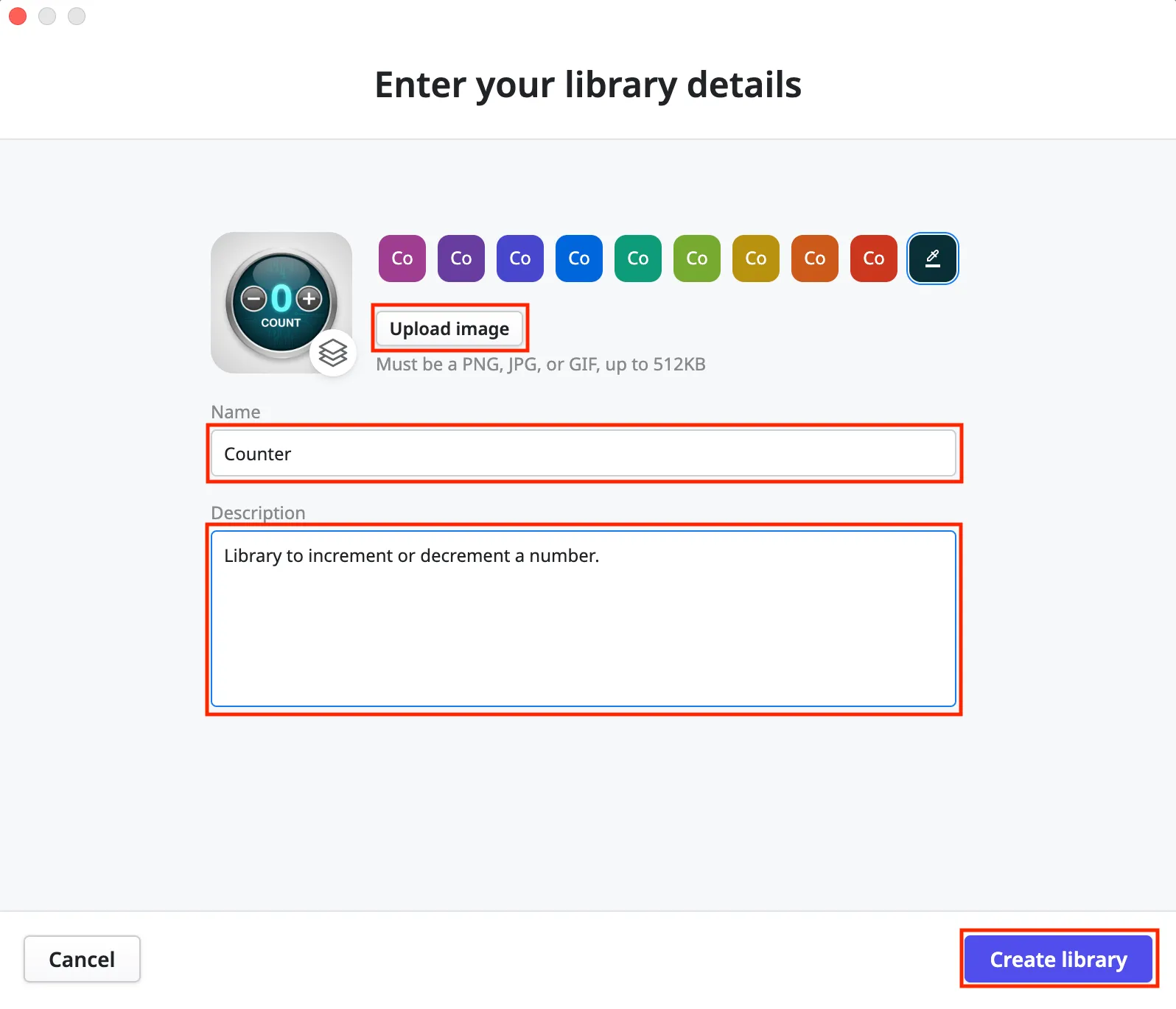
On the Enter your library details screen, add the name, description (optional) and icon(optional). Click the Create Library button.
Adding Islands dependency
Section titled “Adding Islands dependency”-
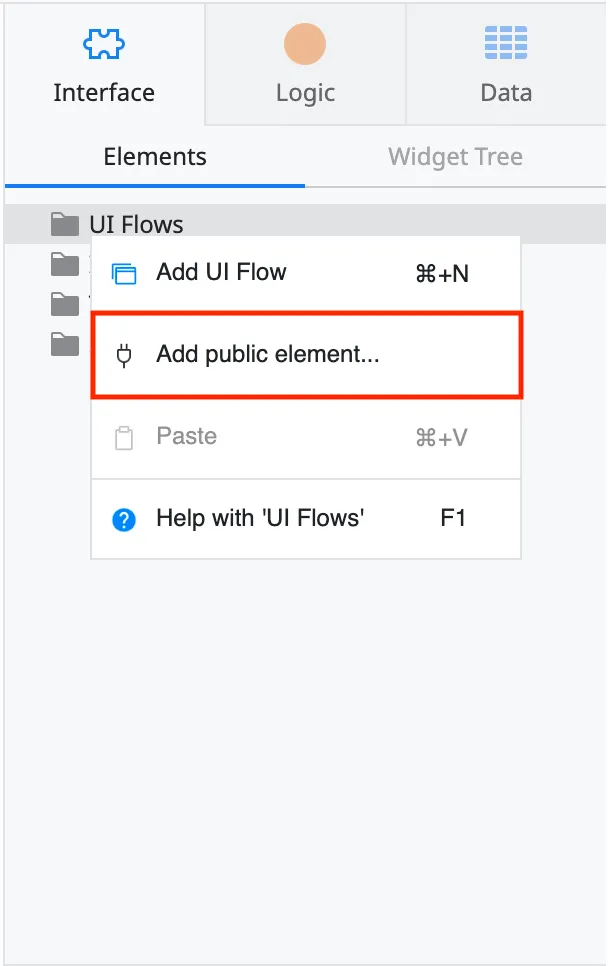
Right click on the UI Flows folder and select Add public element…
-
On the Add public elements to [library] popup, select the All sources dropdown and search for Islands. On the second dropdown, where UI Flow may be selected, select All sources. From the elements list, select the
Astroflow,AstroIslandblock andCreateFunctionPropclient action. Click the Add button.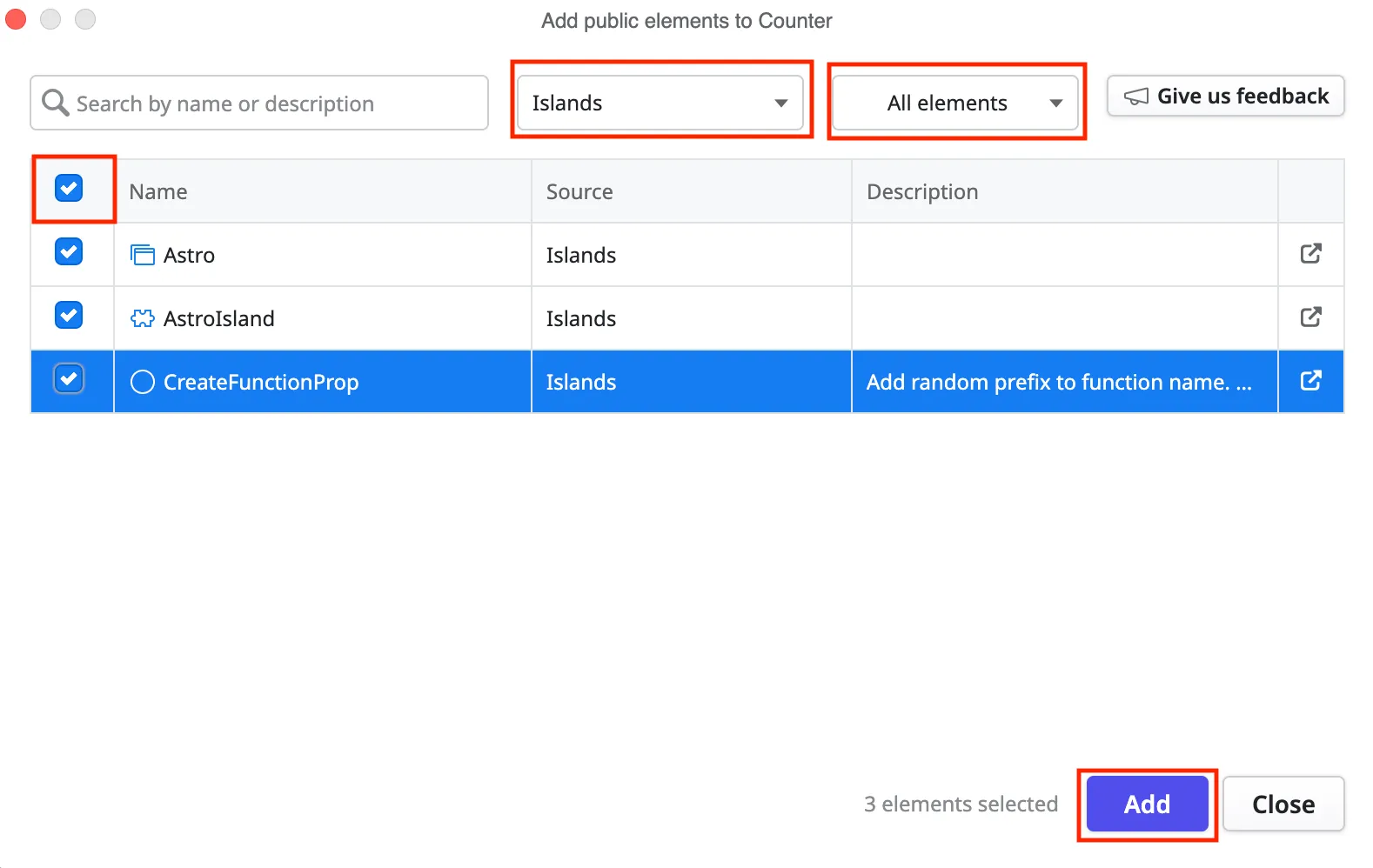
Editing module
Section titled “Editing module”-
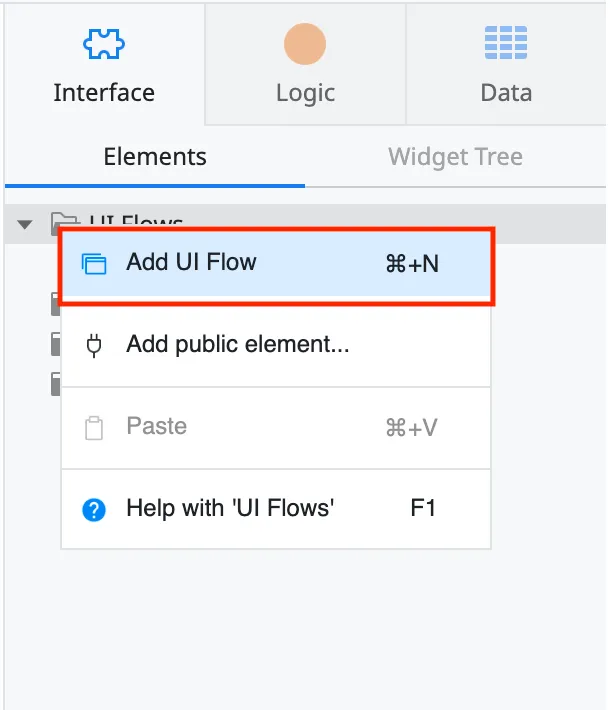
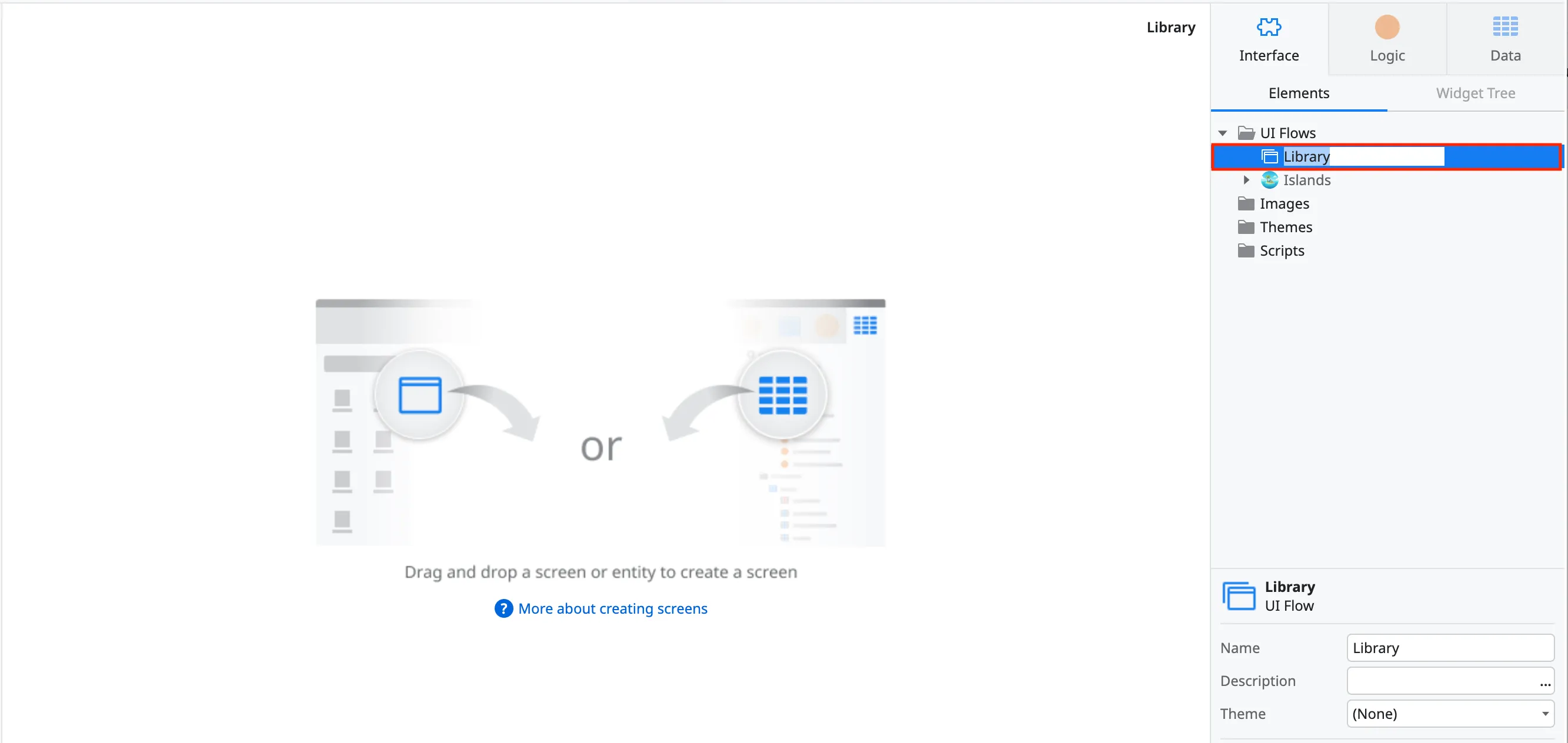
Right click on UI Flow and click Add UI Flow. Give the flow a name such as Library. This can also be updated later in the information panel.
-
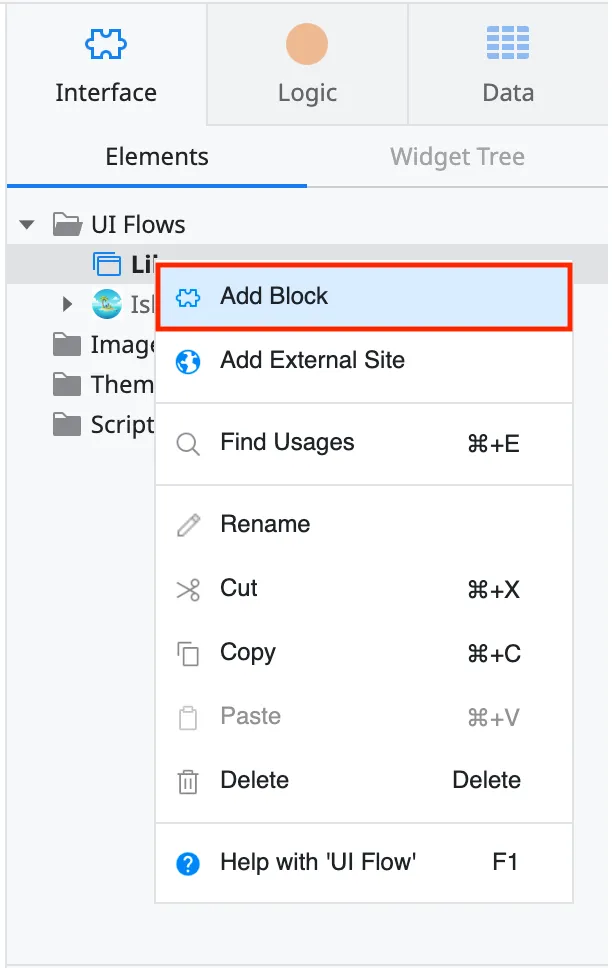
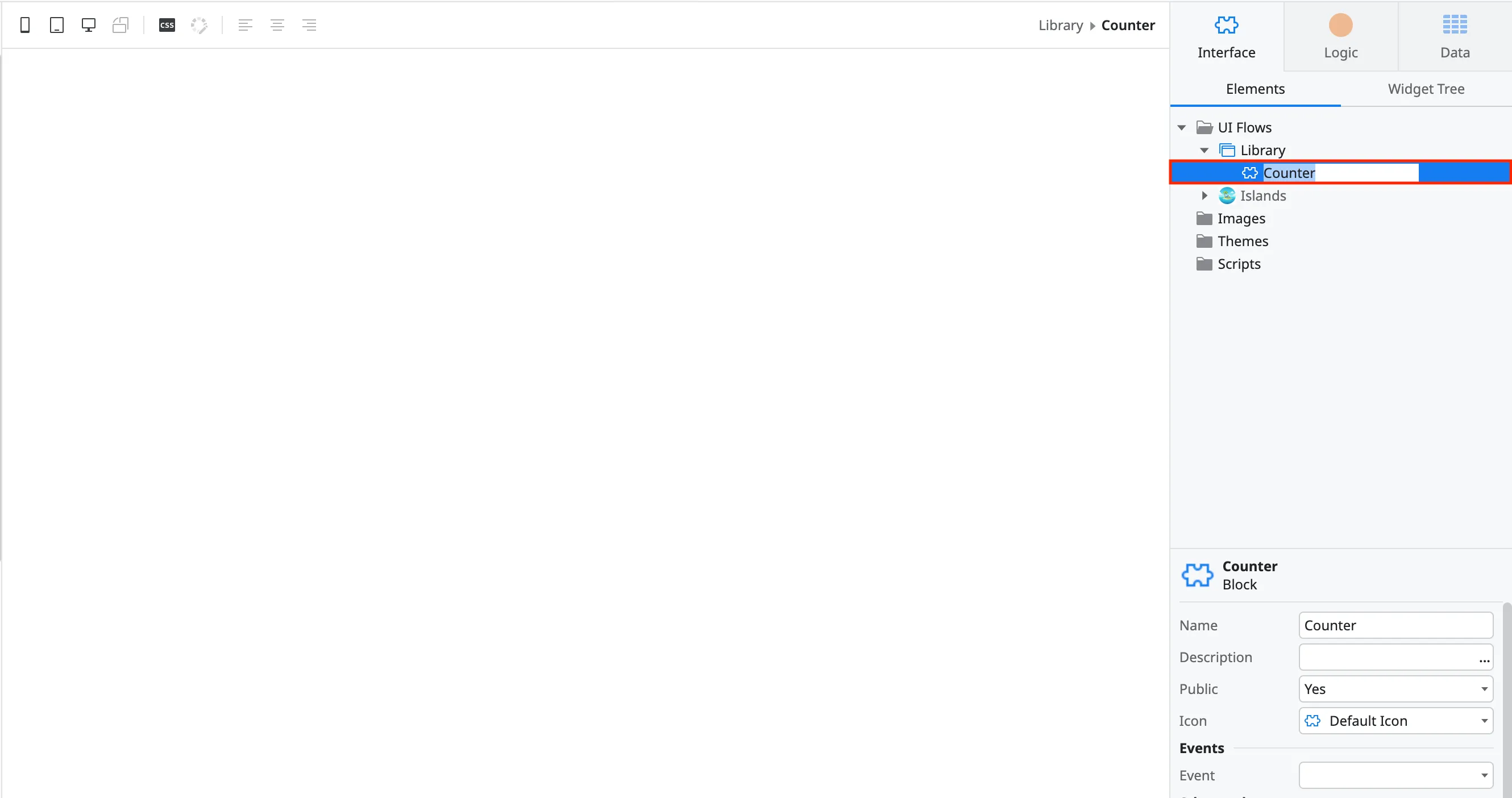
Right click on the newly created flow and click Add Block. Give it a name.
-
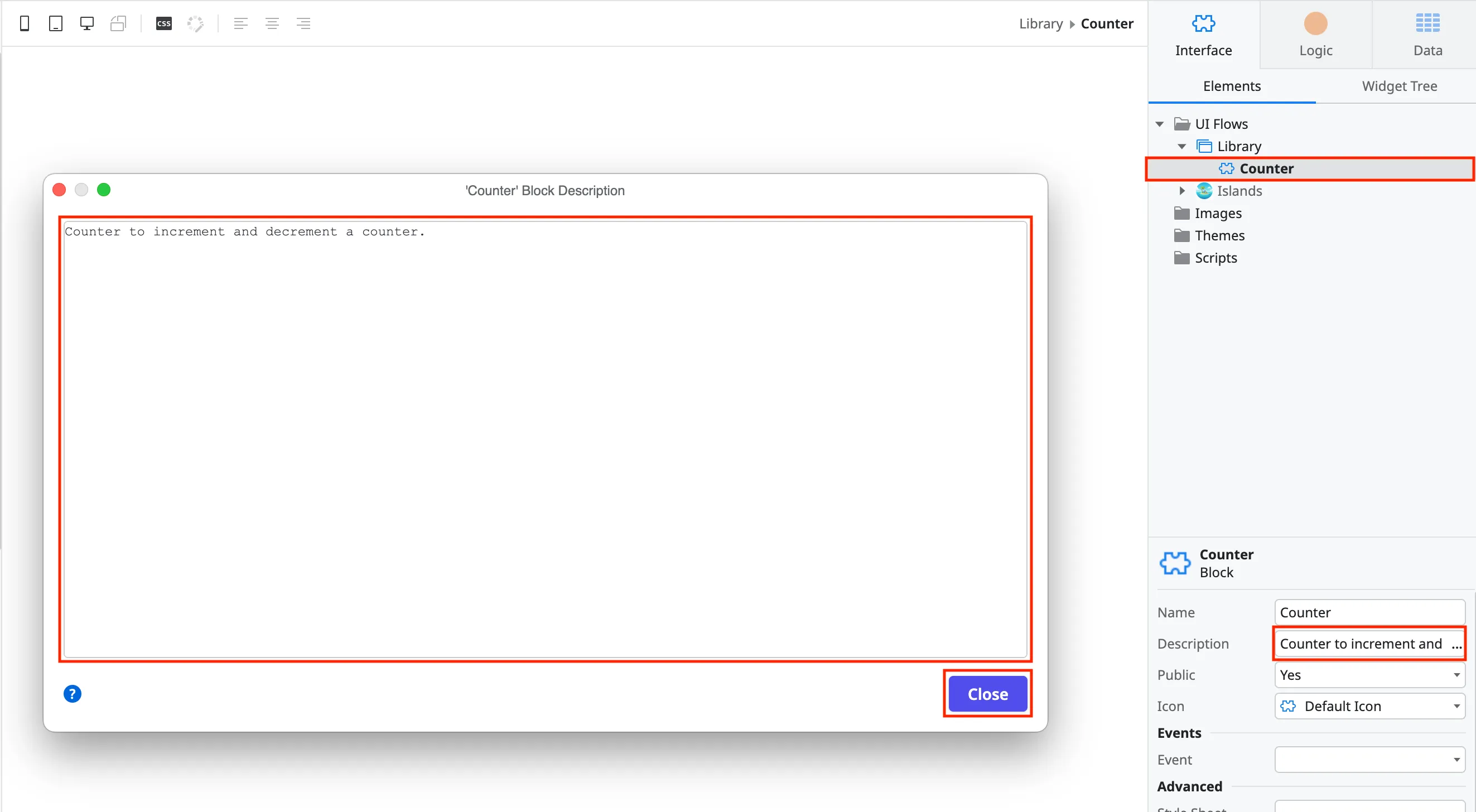
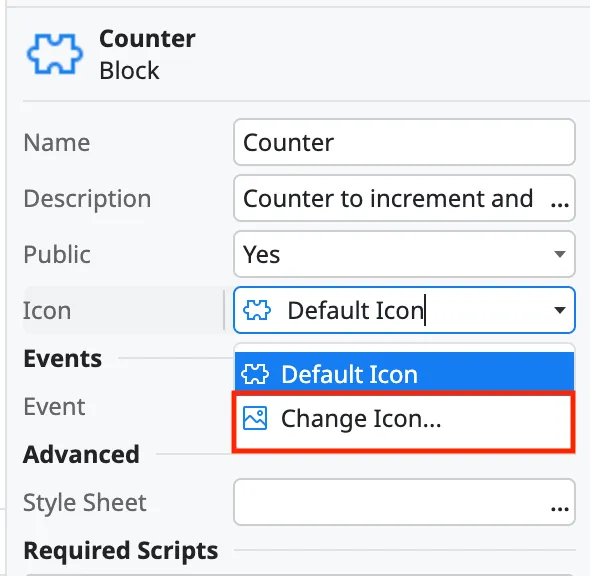
Give the block a description and icon. It is recommended to add description and change the default icon. If both of these are done, when consumed, your library/widget can be made available as a selectable element in the component panel.
- Click on the block name. Select the three dots in the information panel to edit the description. Click the close button in the description popup.
- In the information panel, click on the dropdown that says Default Icon and select Change Icon. Find and upload the icon you would like to use.
- Click on the block name. Select the three dots in the information panel to edit the description. Click the close button in the description popup.
-
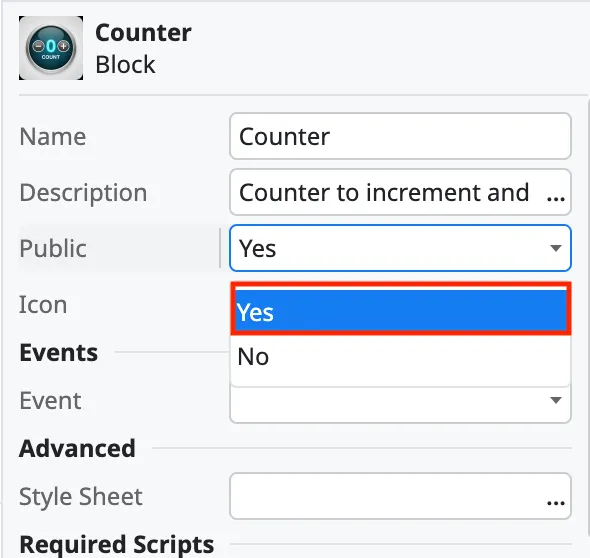
Change the Public attribute to Yes if this block will be consumed by other modules.
Parameters
Section titled “Parameters”Astro Islands can take input parameters and functions, but they must first serialized in a particular way. Text and objects must be serialized using the tools provided by the OutSystems Astro Islands module. Functions/handlers must be bound to the document (or window) object as that is the only method to invoke them. See the Using OutSystems handlers section to view implementation in the Astro component.
-
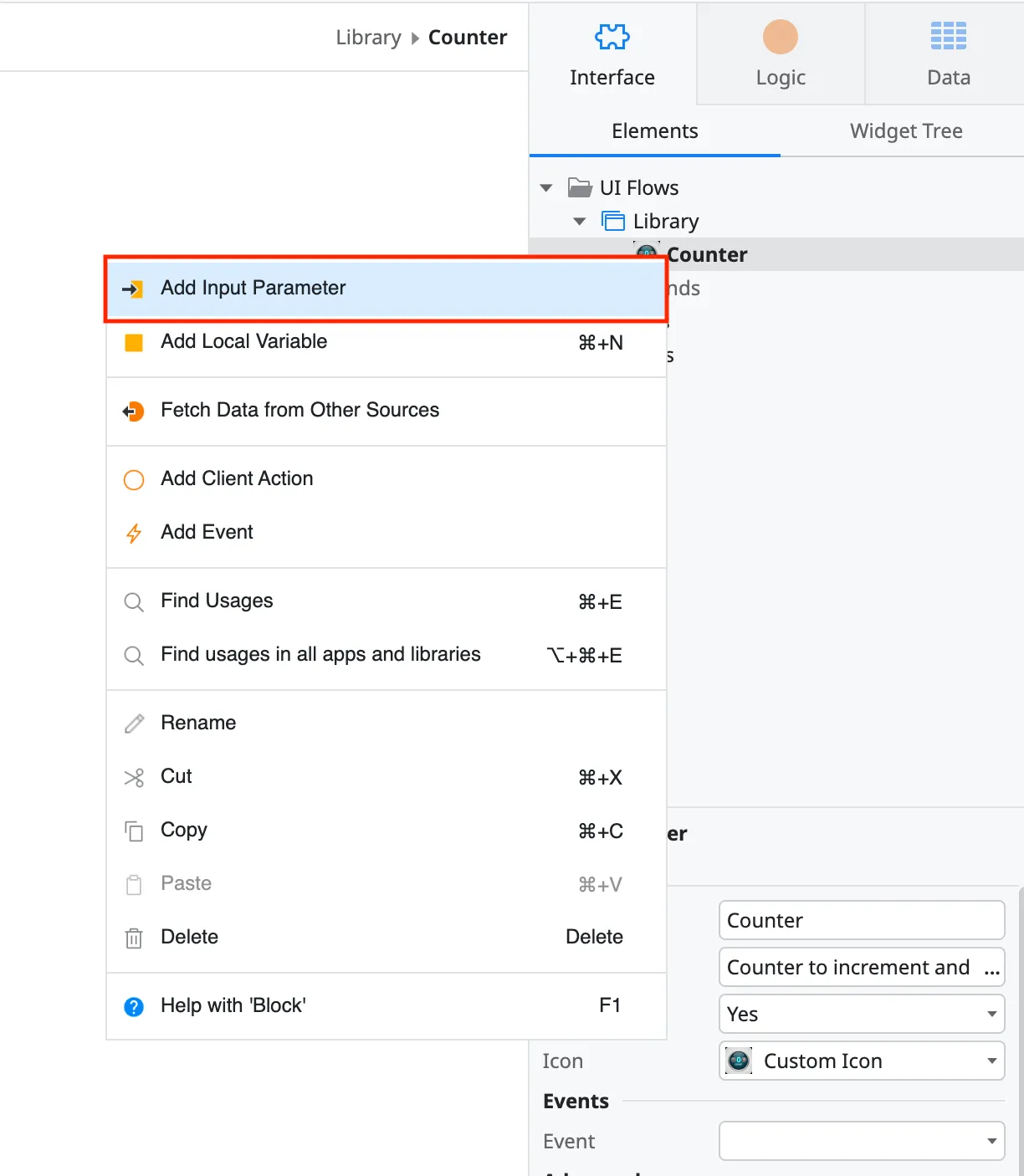
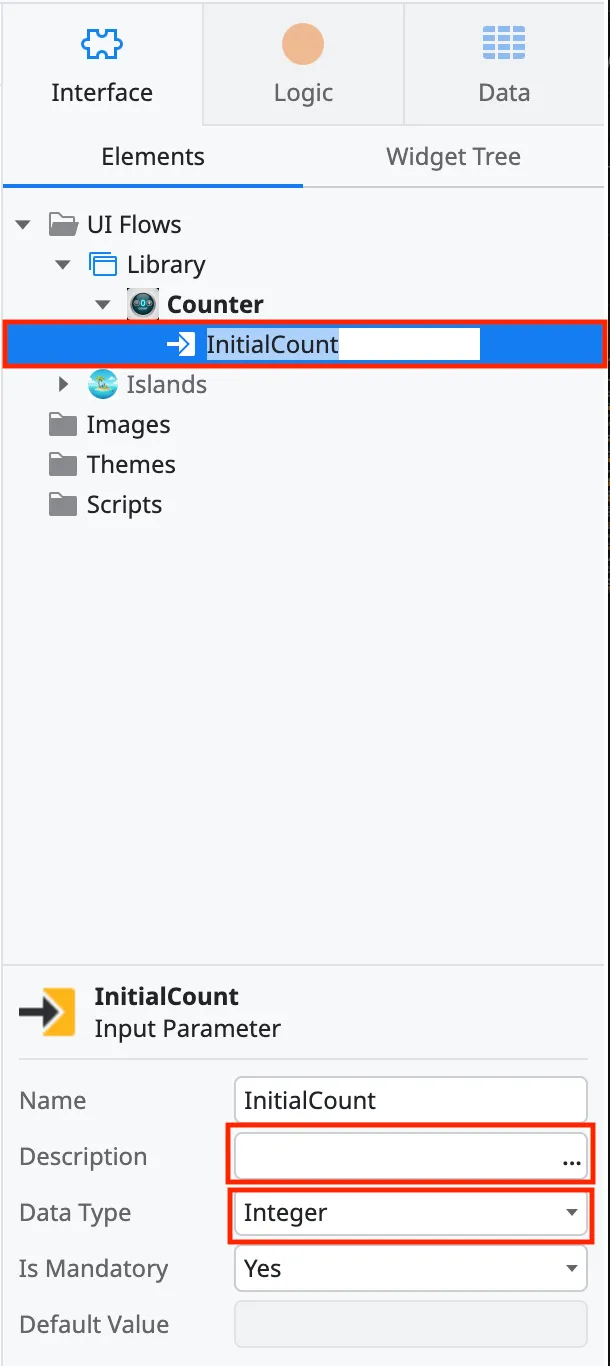
Right click on the block and click on add input parameter. Give the parameter a name and type. The parameter can be text, number or structure. Do this for every input parameters.
-
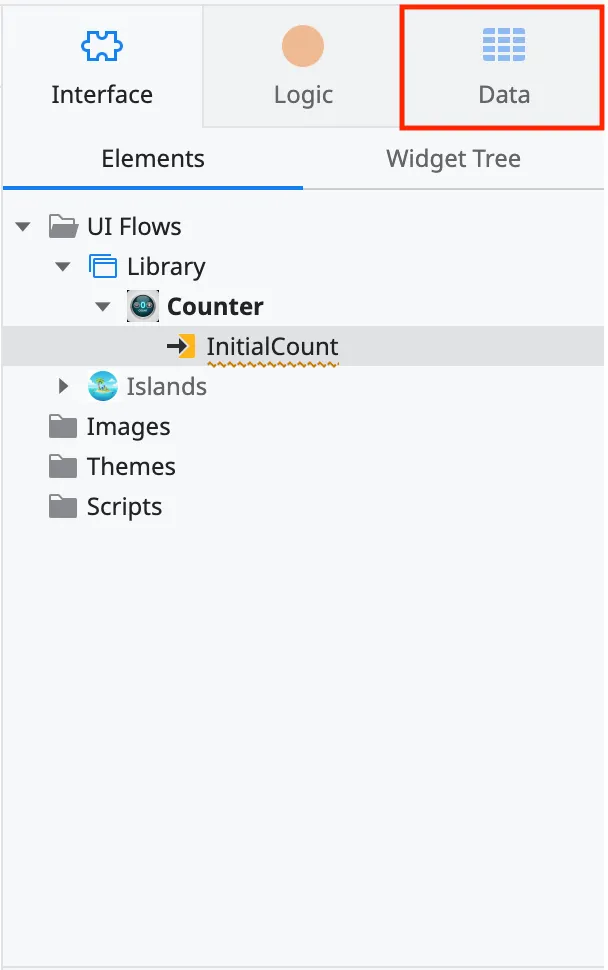
Go to the Data tab in ODC Studio.
-
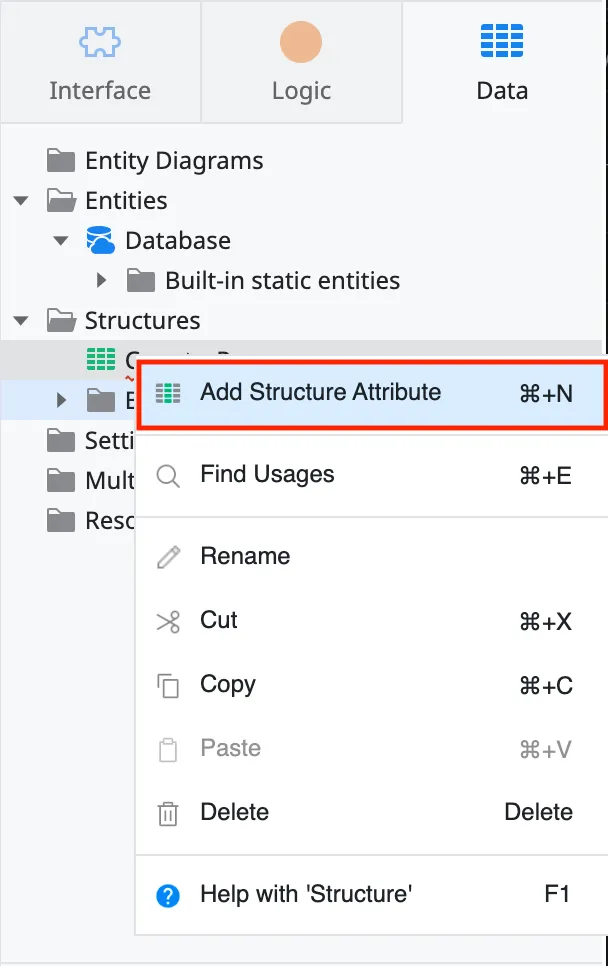
Right click on structures and select
Add a structure.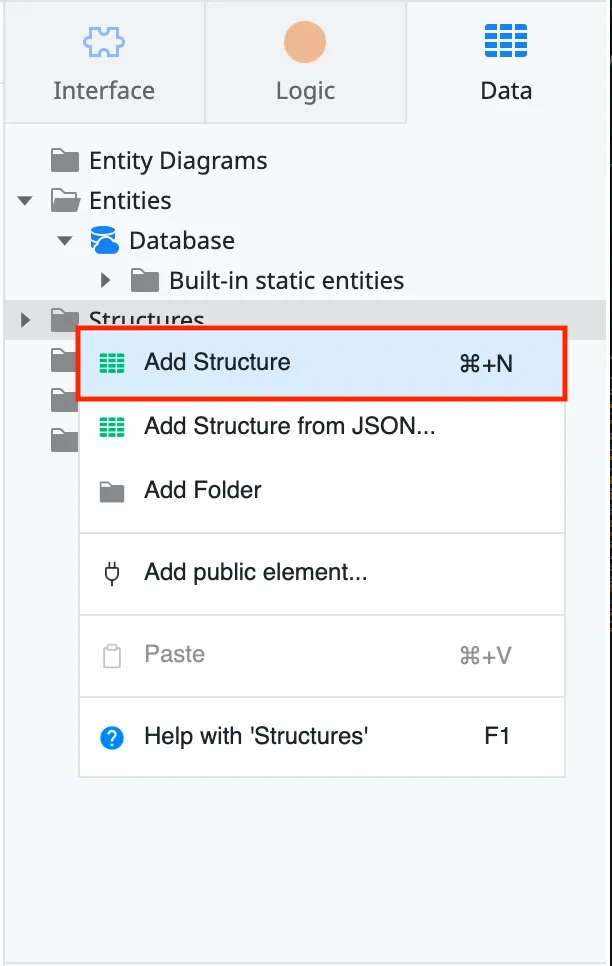
-
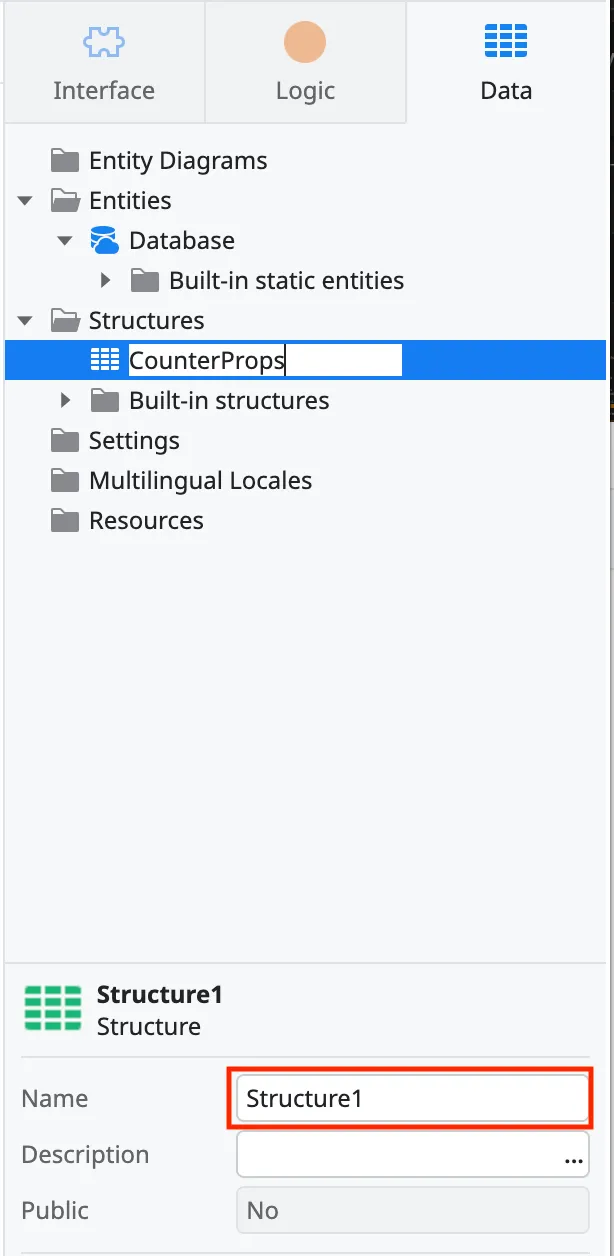
Give the structure the name of library and Props (for example, CounterProps). This is to distinguish it from any other blocks in this library that may have props.
-
Add every input parameter as an attribute into the Prop structure. Make sure to set their types. Any function handlers should be added by their name as a text attribute type.
-
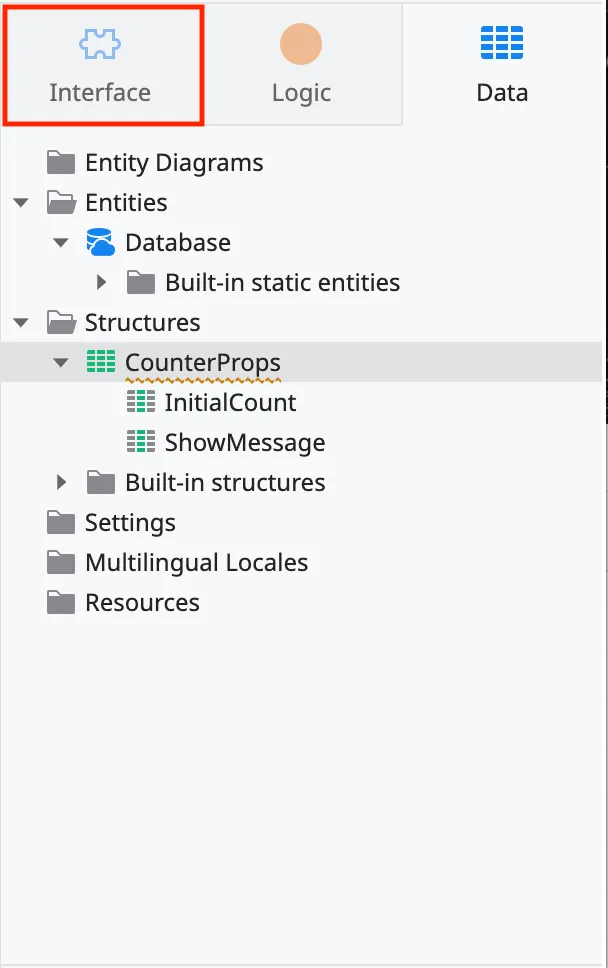
Go back to the Interface tab and click on the block.
-
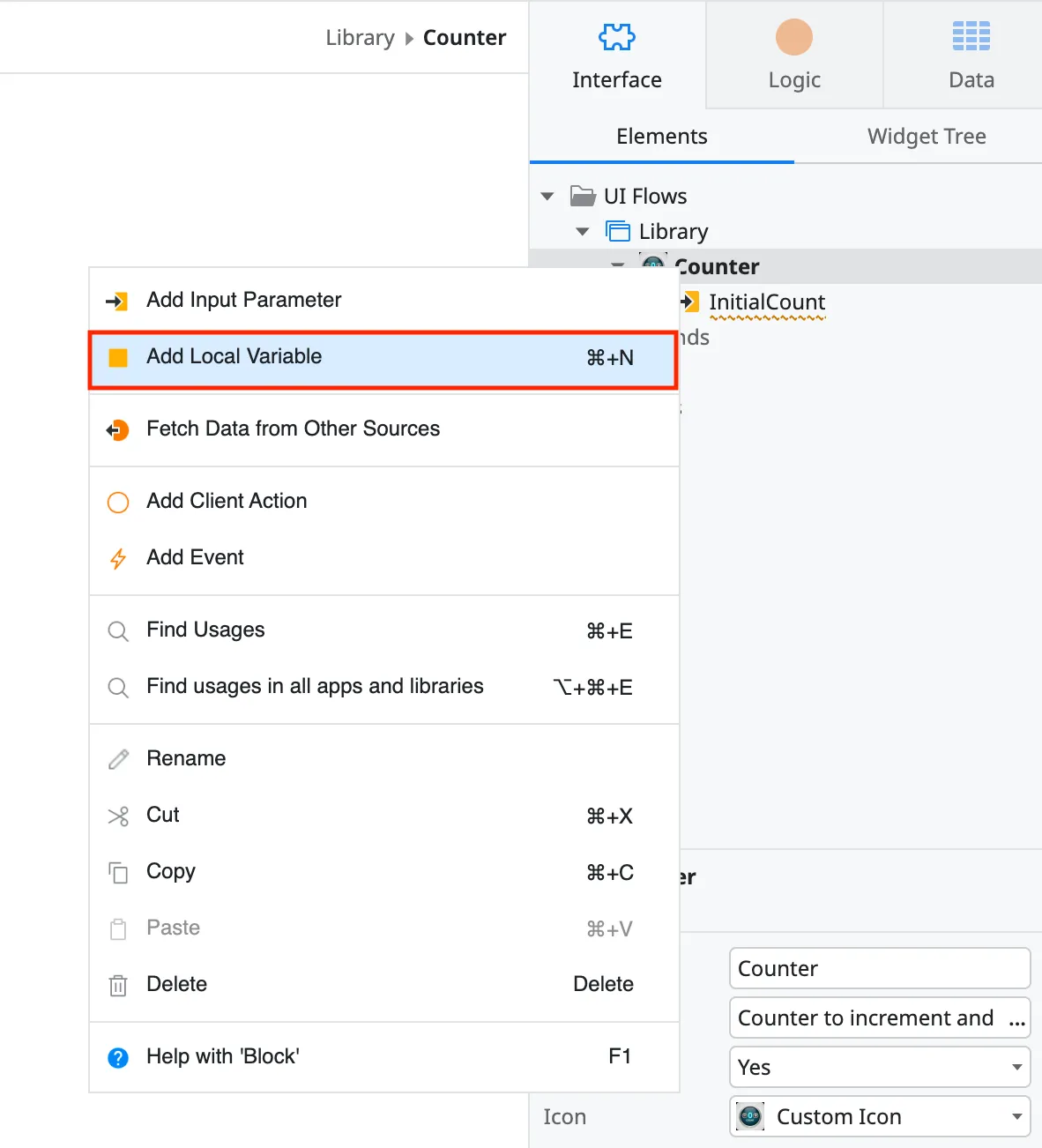
Right click on the block and select Add Local Variable.
-
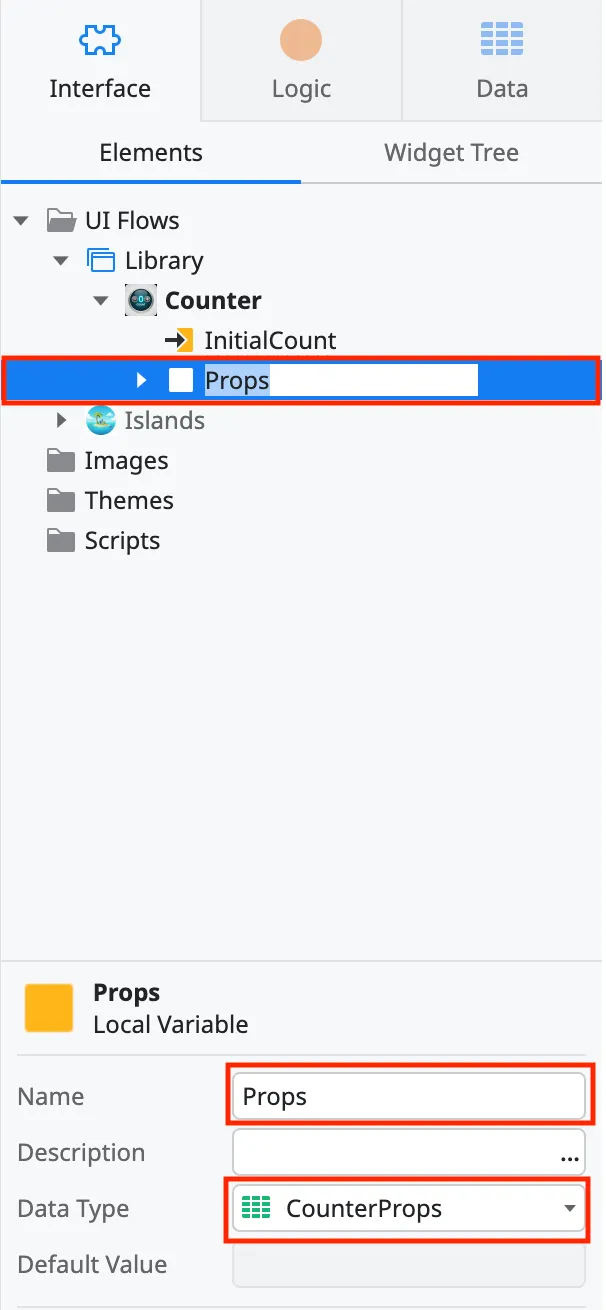
Give the new local variable the name Props and then select the structure you created in the previous steps as the type. This is the incoming parameters that will be passed into the front-end library.
-
Create another local variable and call it PropsSerialized. The type for this variable should be Text. This is the serialized value that is necessary for the
astro-islandcomponent to process the values.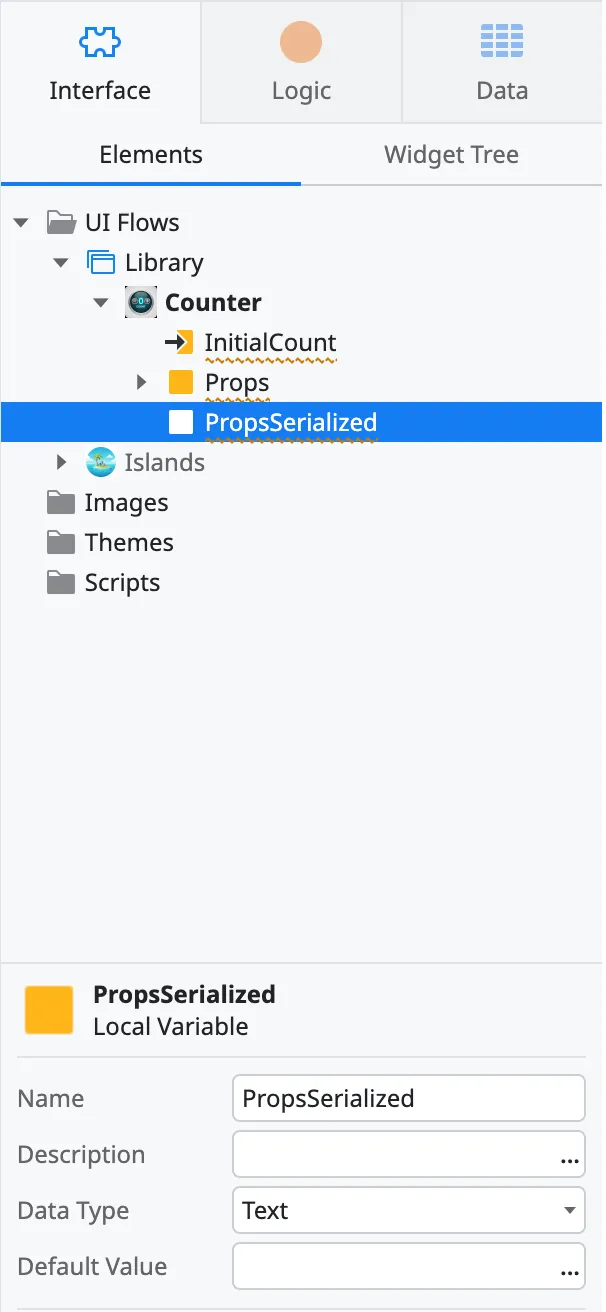
Initialize and apply parameters
Section titled “Initialize and apply parameters”Prepare parameters
Section titled “Prepare parameters”-
If there are any functions handlers coming in, create a function and a function handler. The function should call the handler (with any parameters that it needs).
- To add a client action, right click on the block and select the
Add Client Action. Give the action a name. Make sure to add any input and output parameters your action needs.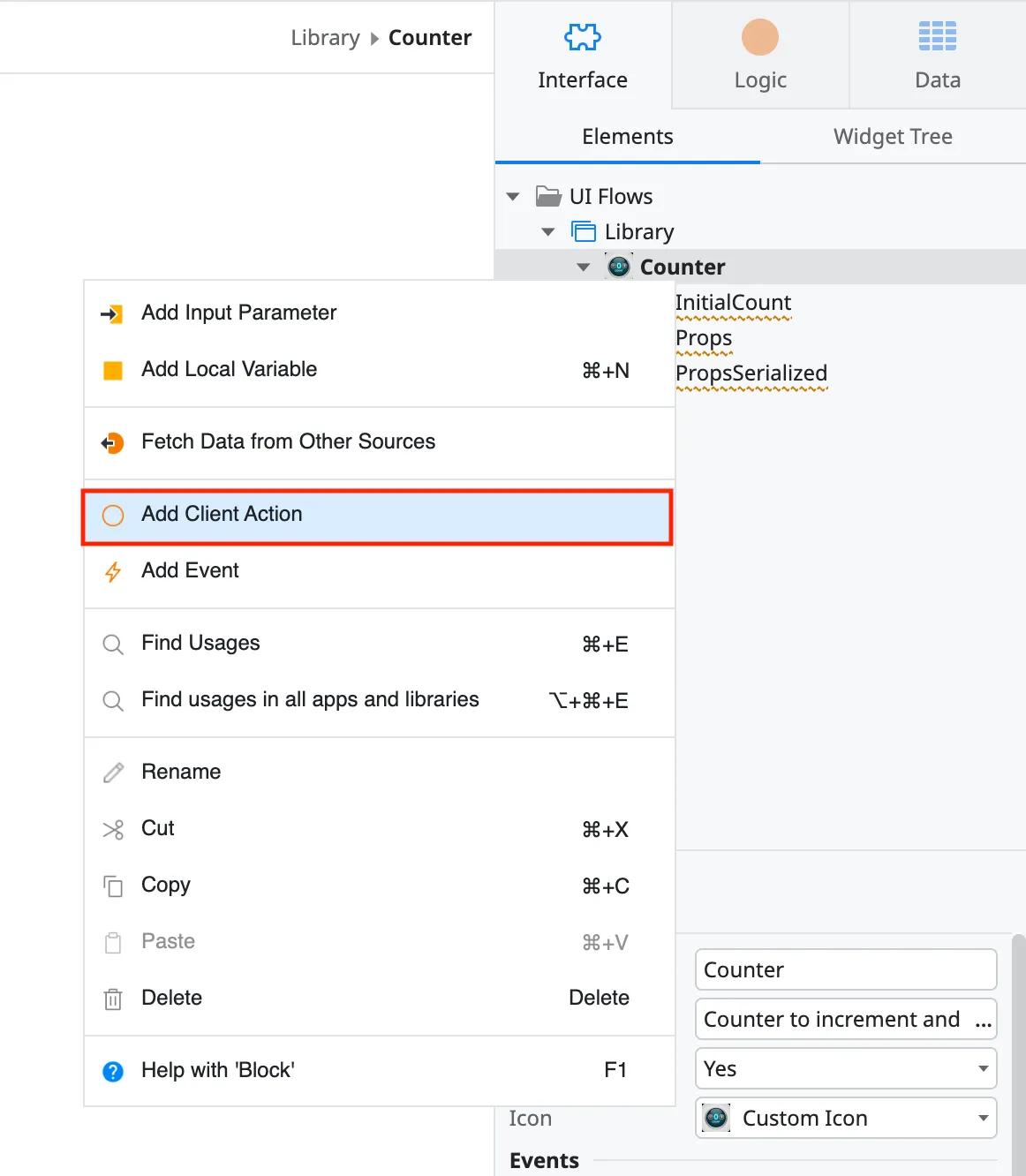
- To add an event handler, right click on the block and select
Add Event. Give the event handler a name. Make sure to match any of the input and output parameters.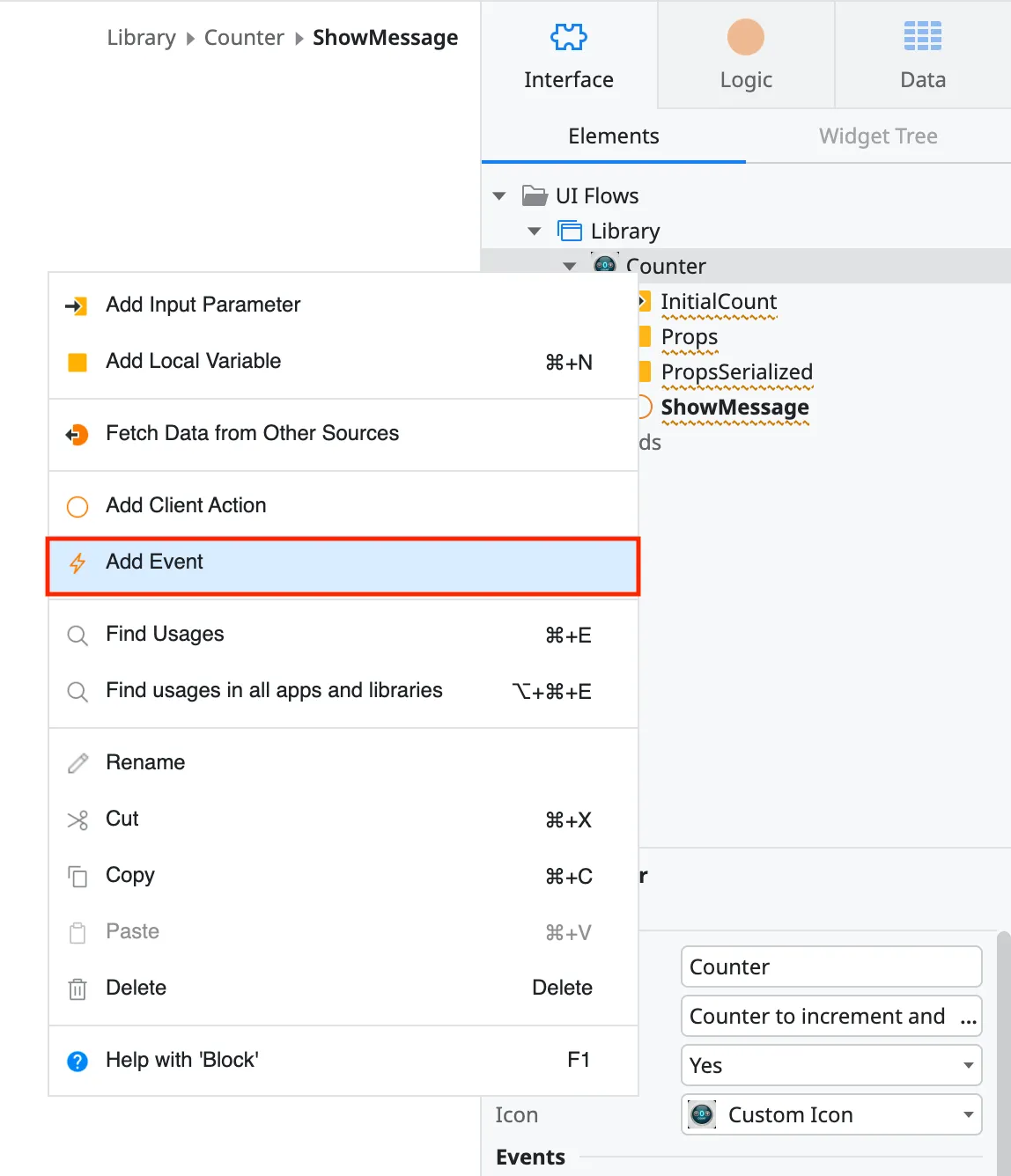
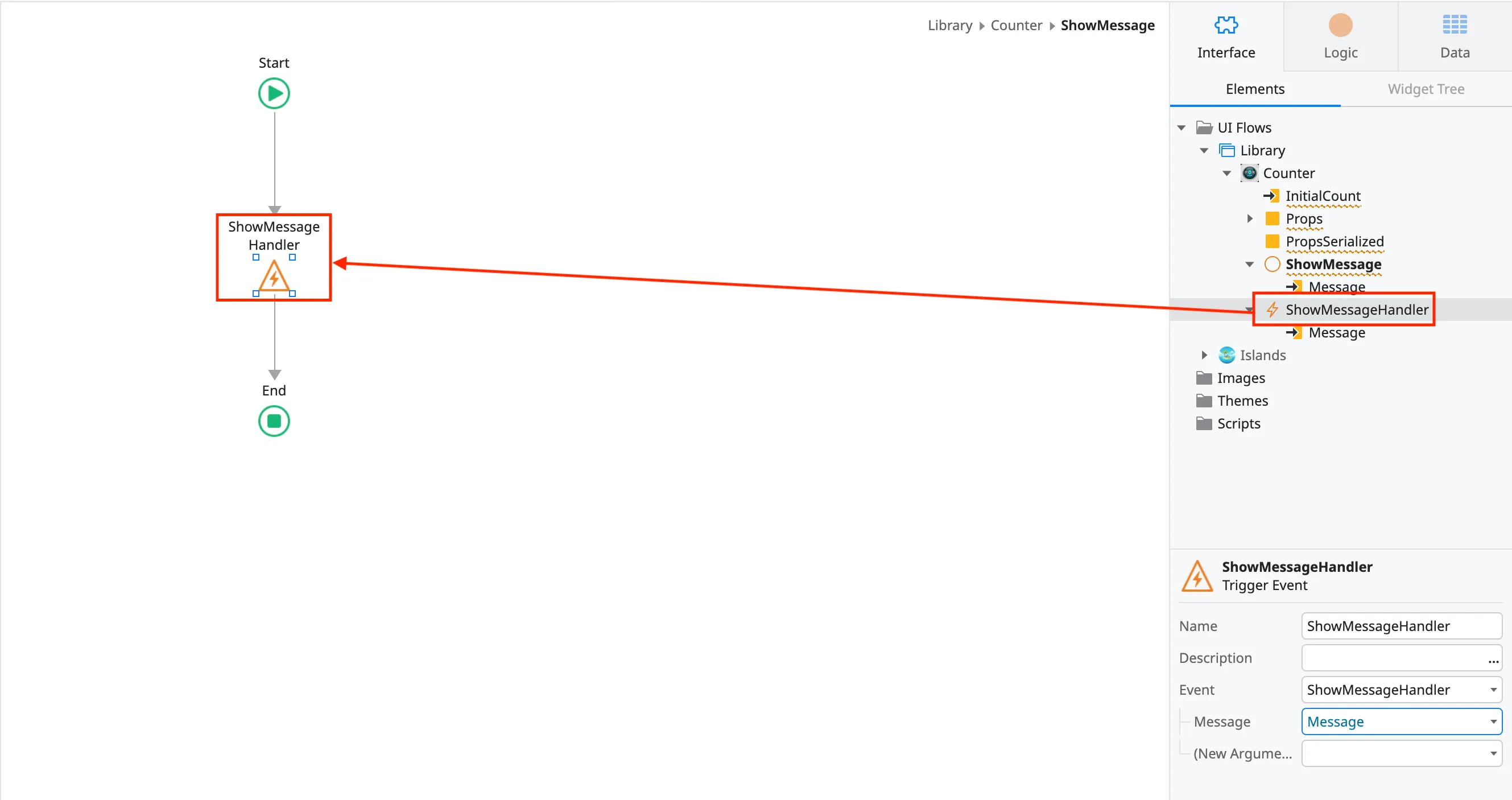
- You can then assign the event handler inside of the client actions.
- To add a client action, right click on the block and select the
-
Right click on the Counter block and select Add Client Action. Name it PrepareProps.
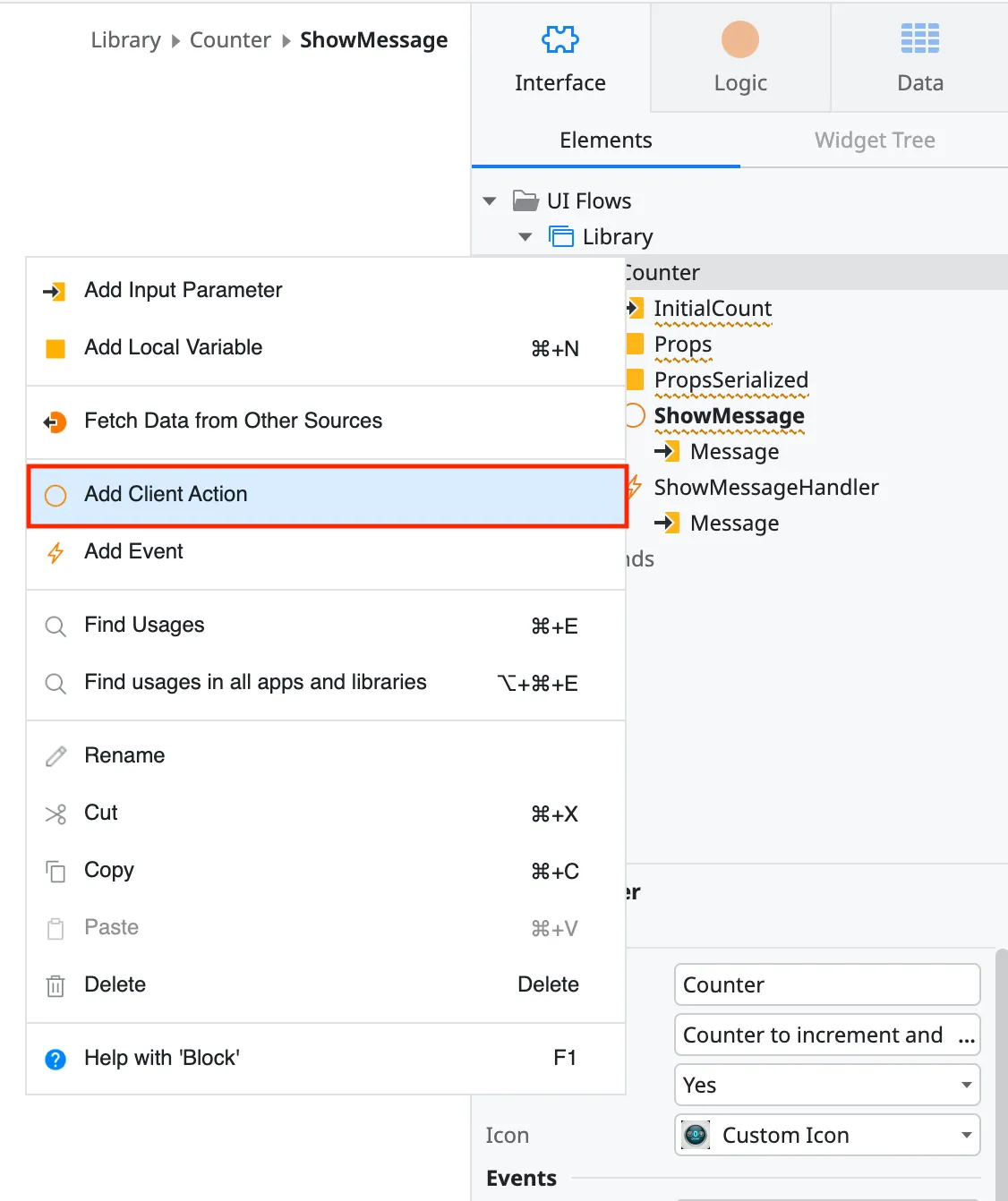
-
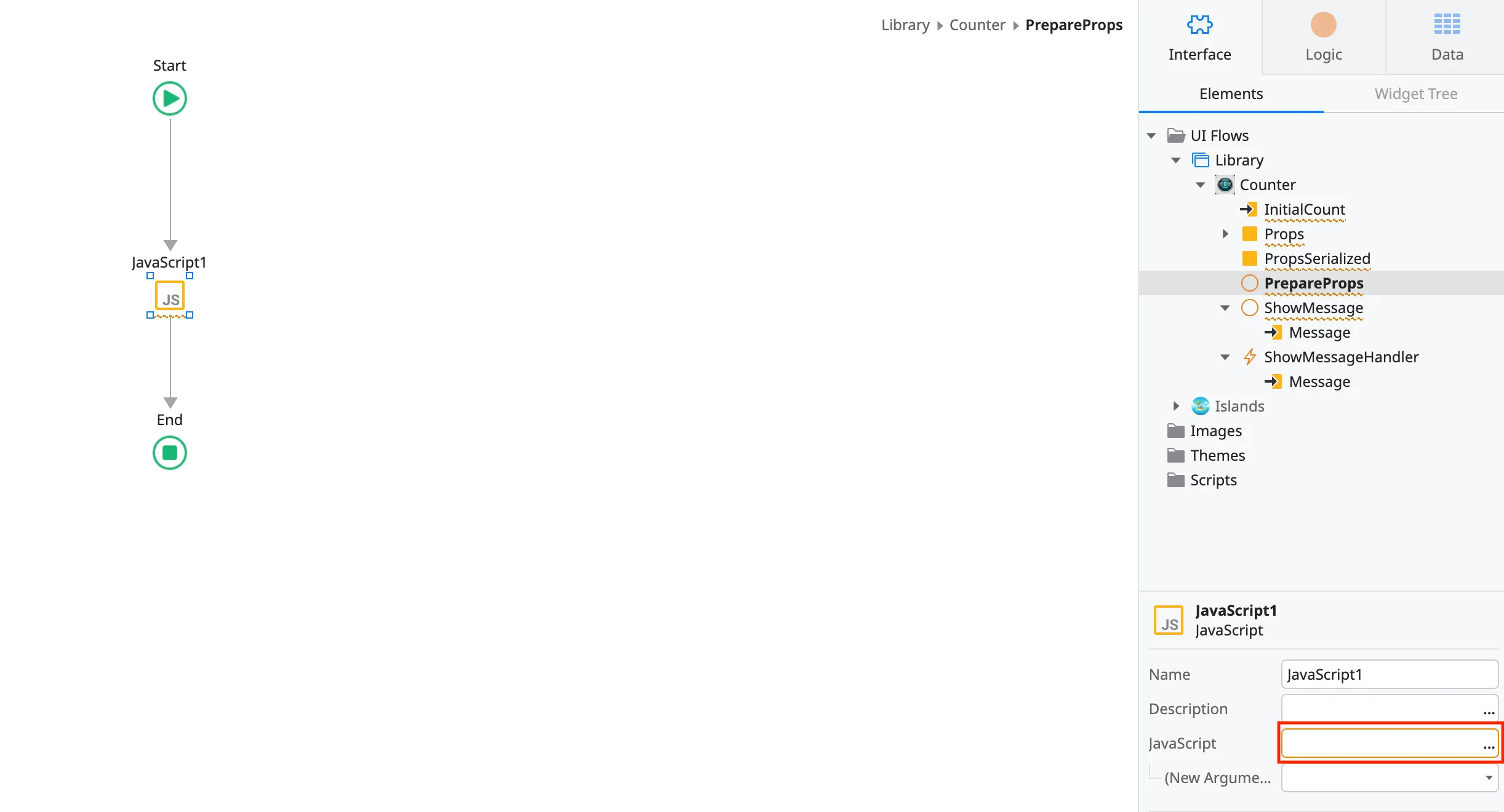
If you have any functions, you will need to add a special JavaScript block. Drag over the JavaScript component and name it
SetFunctionProps. Open the JavaScript contents.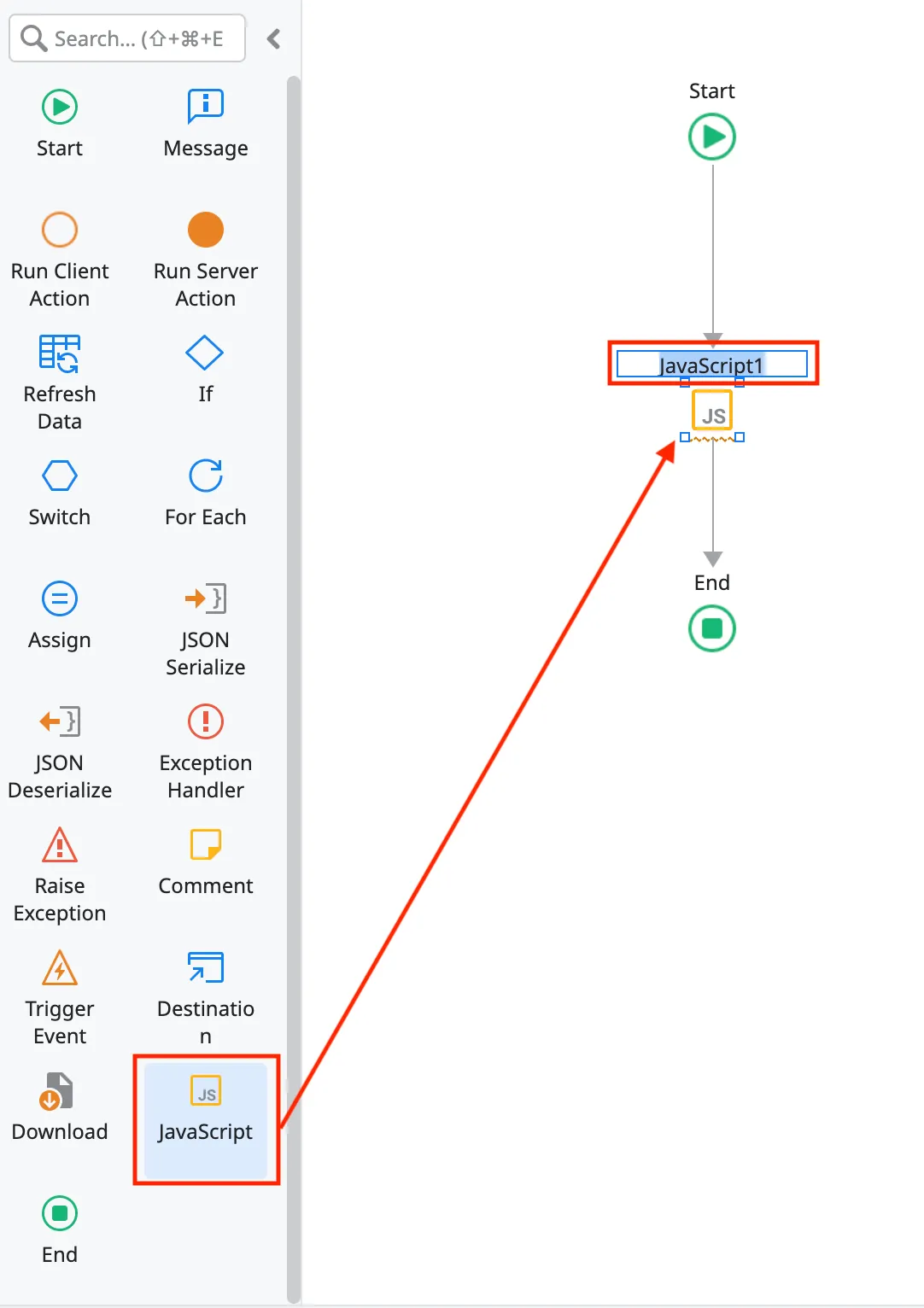
-
Inside of the JavaScript block, you will need to bind any function handlers to the document body. There is also and Astro Island function to randomize the name so that there are no function collisions. You can use the following script to bind them (update names to match your components):
const ShowMessageName =$actions.CreateFunctionProp("ShowMessage").UpdatedFunctionName;document[ShowMessageName] = $actions.ShowMessage;$parameters.ShowMessageName = ShowMessageName;Ensure that the library inside of your Astro components is calling the
document[FUNCTION_NAME](param).This is a helper method from the Astro Island library to create a randomized function name:
const FUNCTION_NAME =$actions.CreateFunctionProp("FUNCTION_NAME").UpdatedFunctionName;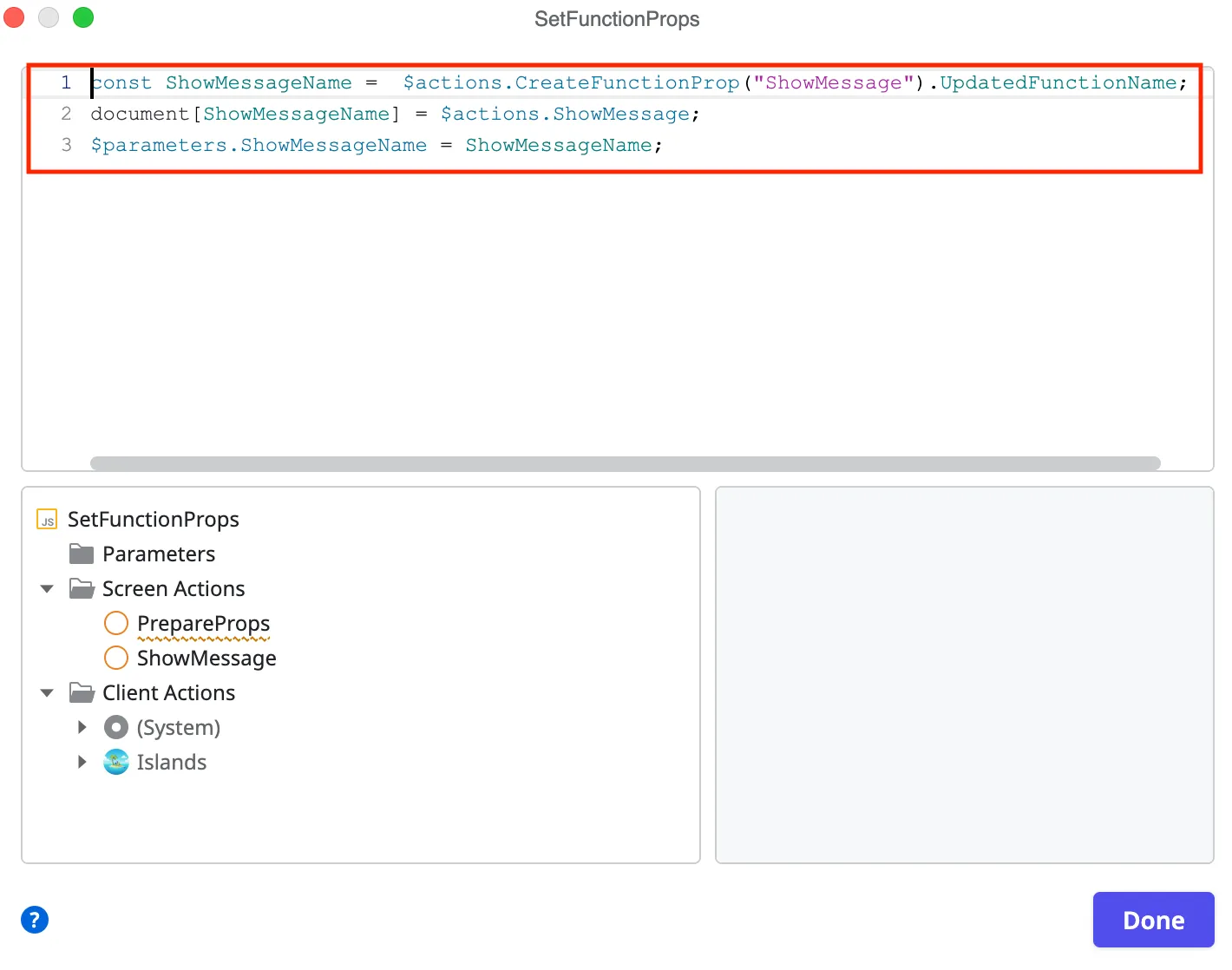
-
Right click on parameters and select
Add Output Parameter.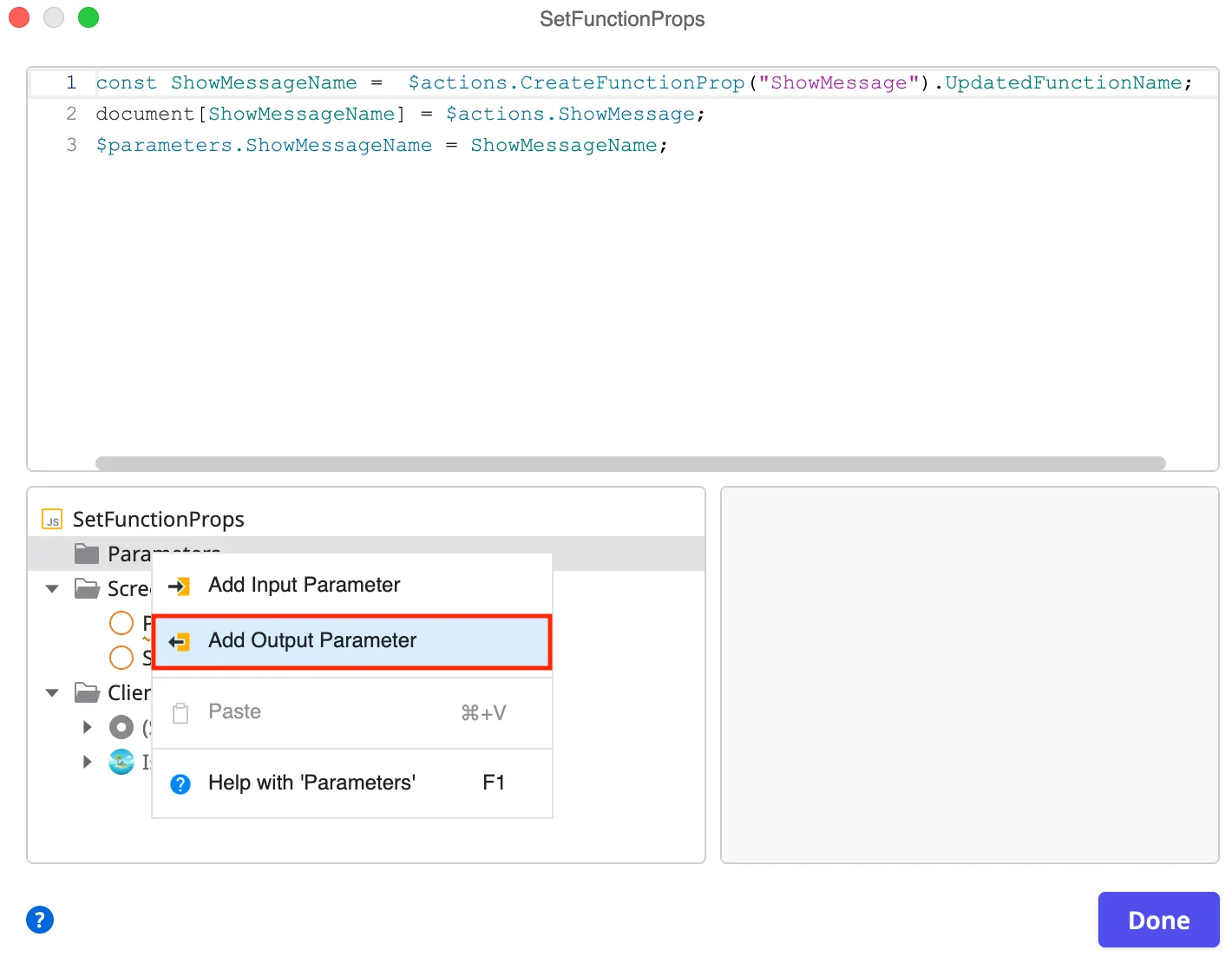
-
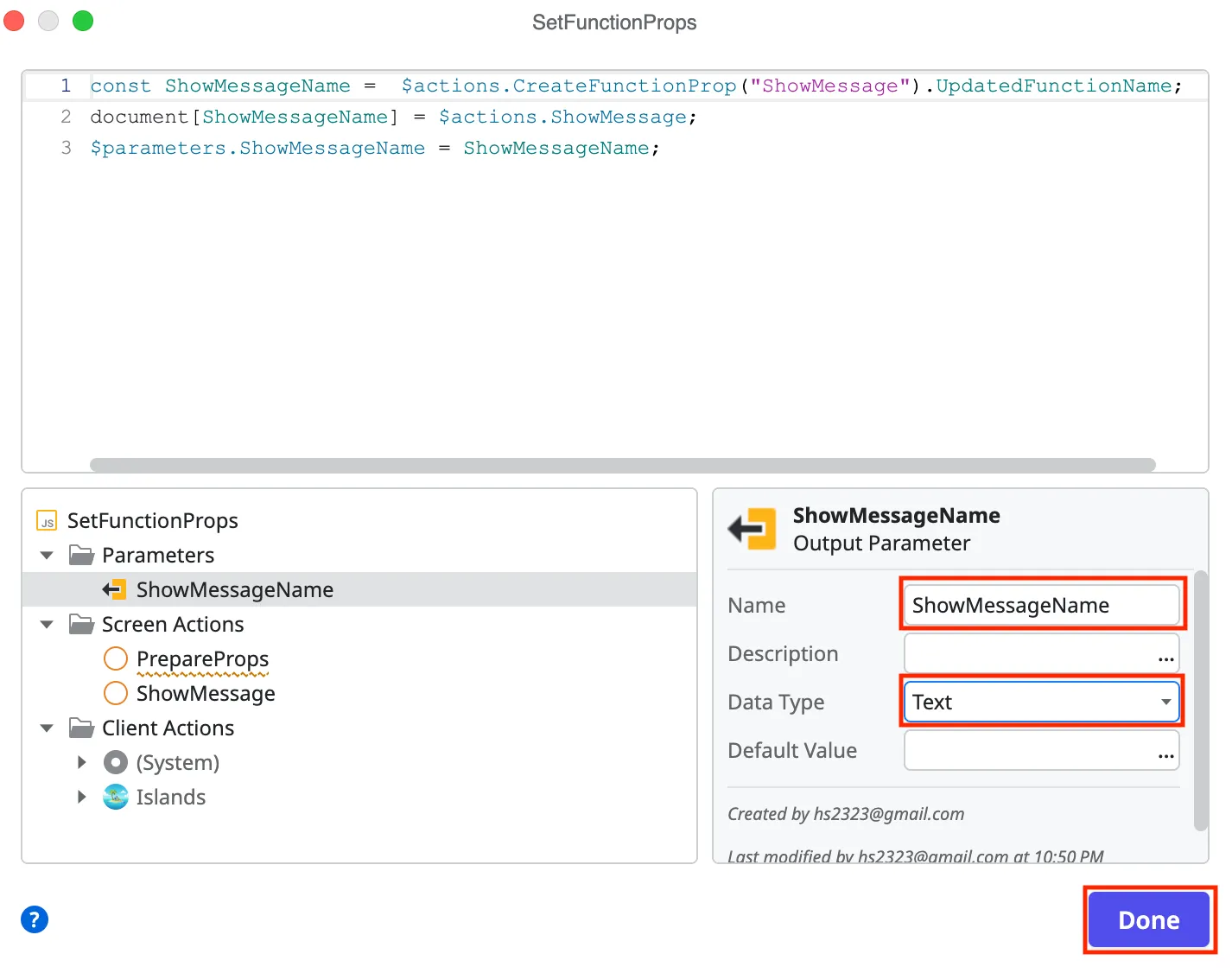
Set the name of the output paramter and the type to Text. This will be the randomized name of the function (in case multiple instances are instantiated). Click the Done button.
-
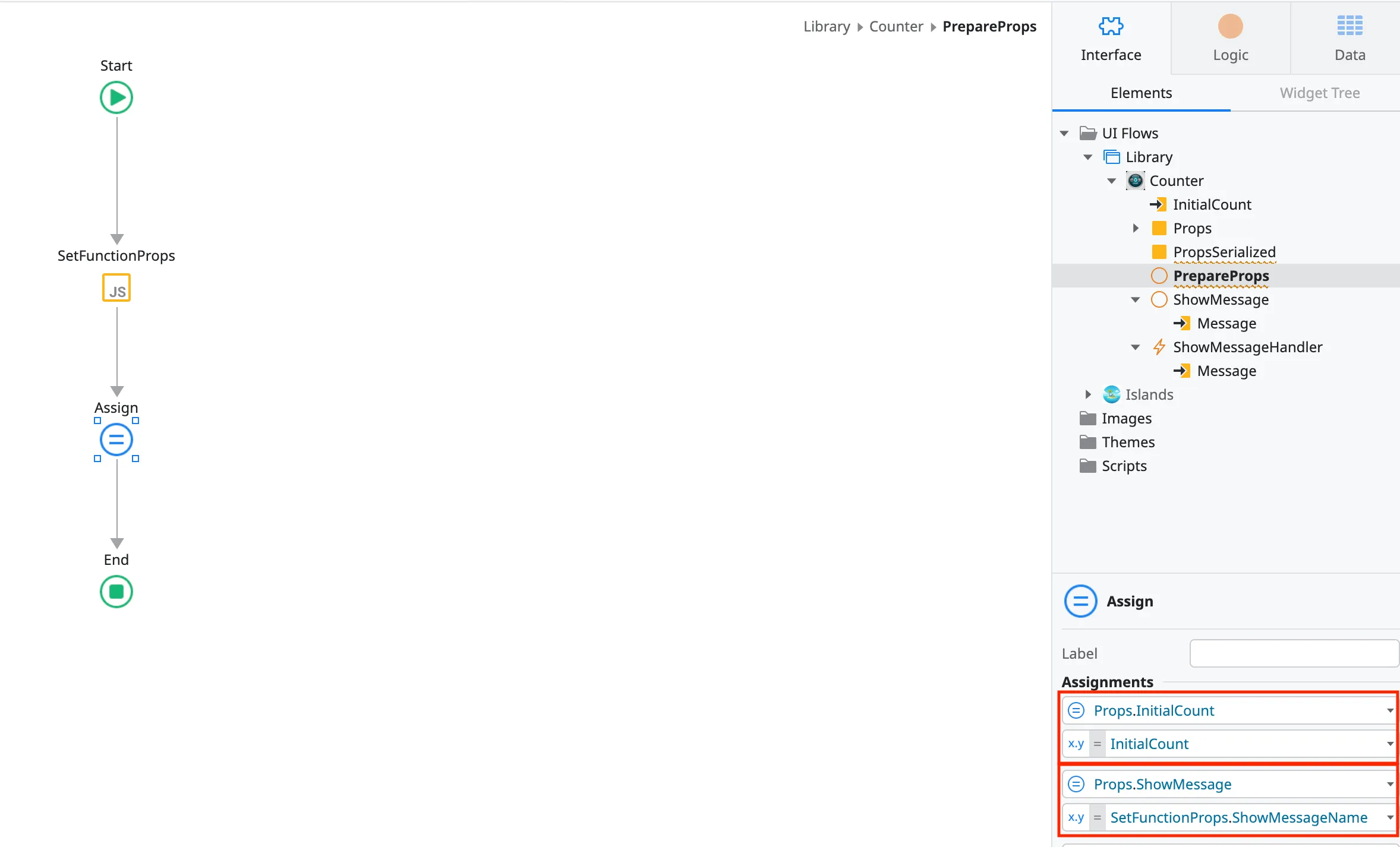
Add an assign control and assign all of the input into the props parameter. That includes the output randomized name from the
SetFunctionProps.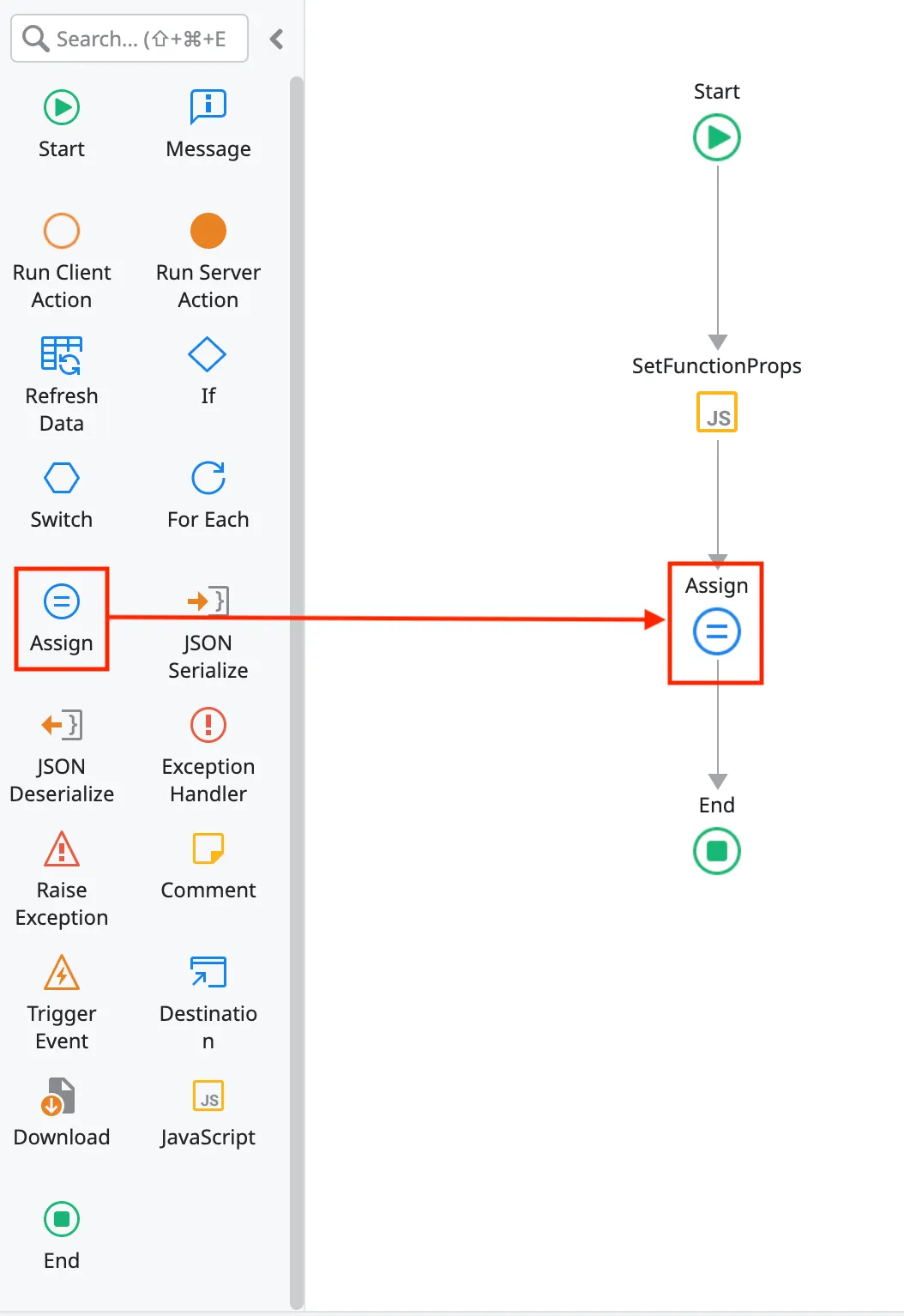
-
Add the JSON Serialize element to the flow.
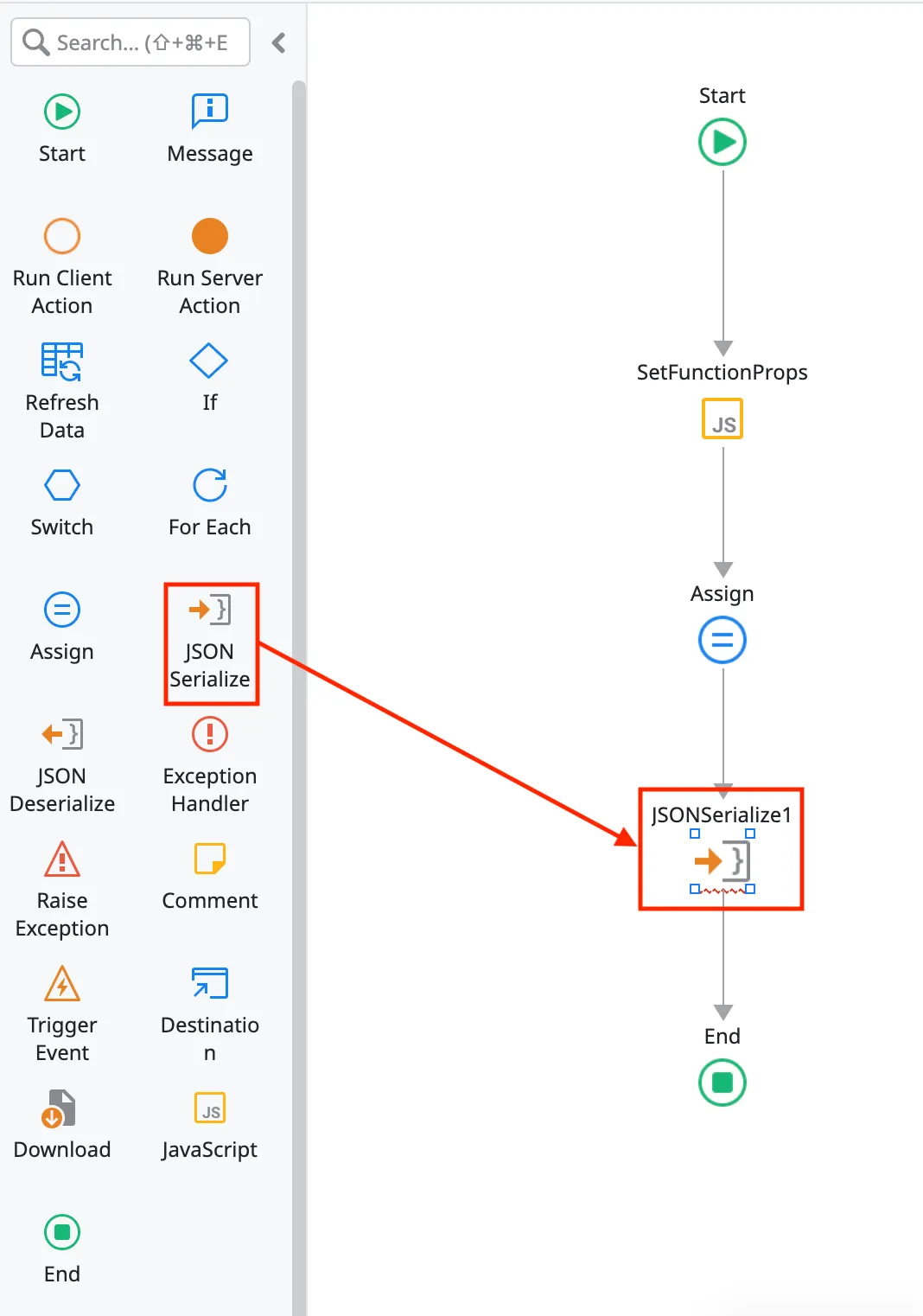
-
Set the Props variable as the Data value.
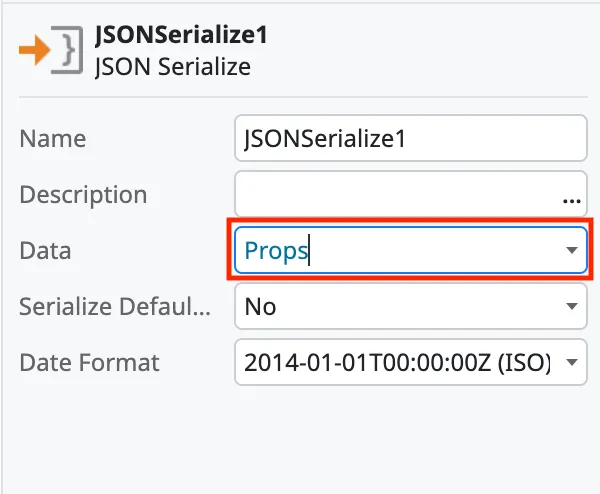
-
Depending on your use case, you may want to set the Serialize Default Values to true. Since OutSystems does not have the concept of NULL values, this will send the Prop value even if there is no value passed. Without it enabled, the parameter will not be sent if no value is passed in. It is either all are sent or only the ones passed in. There is no way to pick which ones should be passed with a default element.
-
Assign the serialized props to the
PropsSerializedvariable.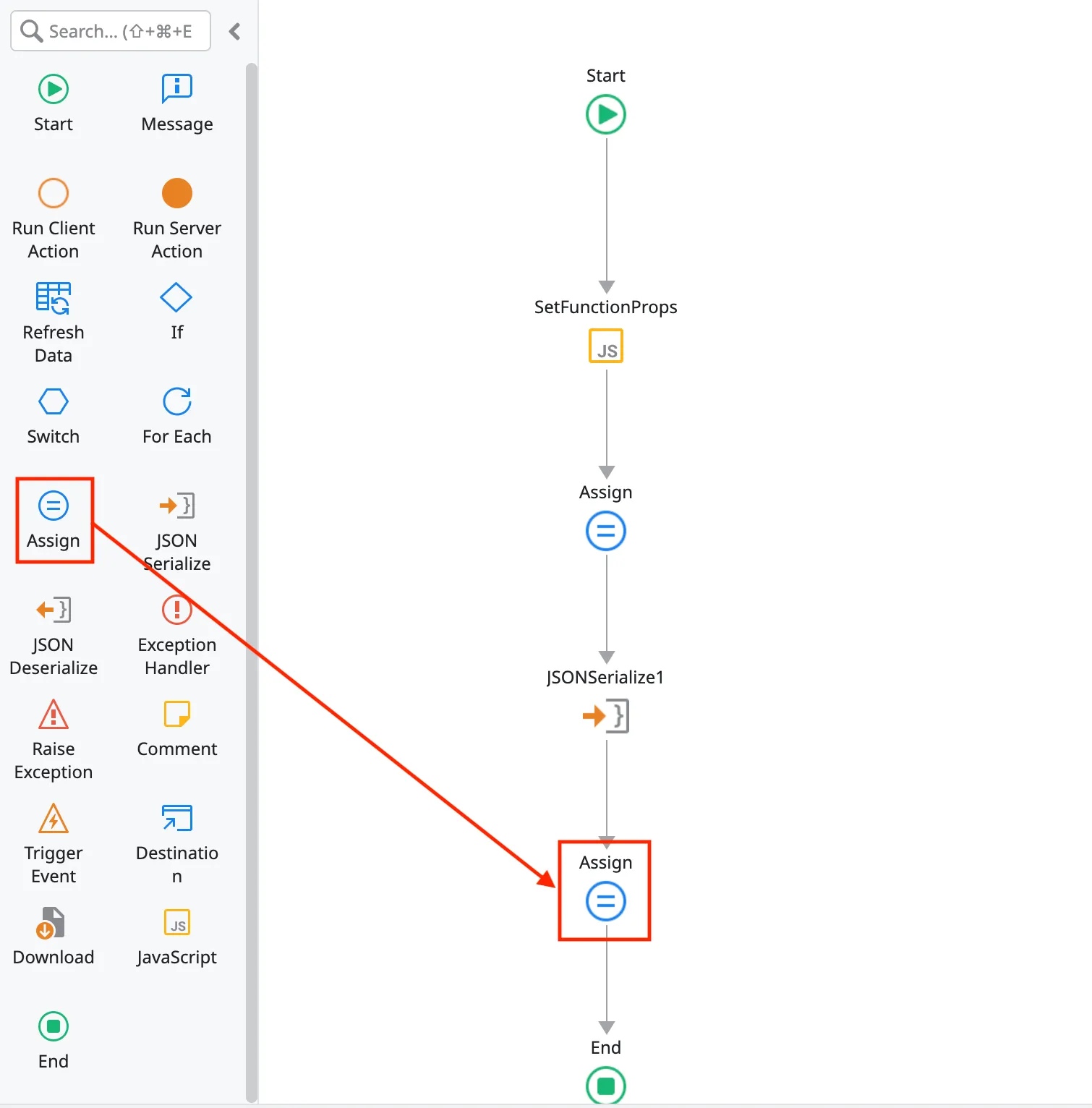
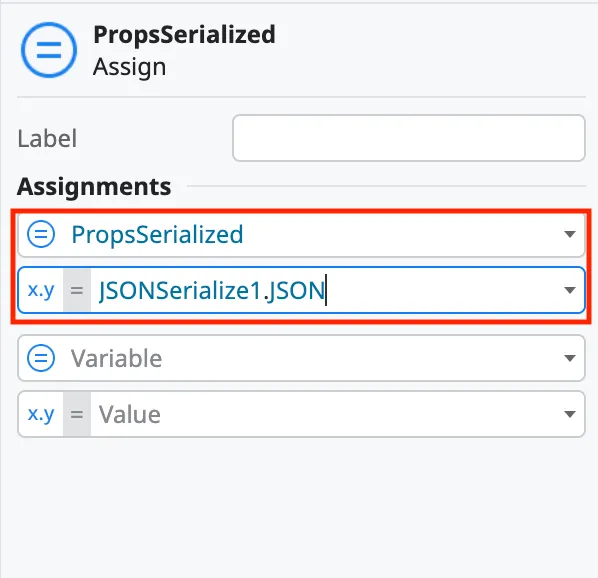
Initialize parameters
Section titled “Initialize parameters”-
Go to the library component and scroll down in the properties to create an OnInitialize handler.
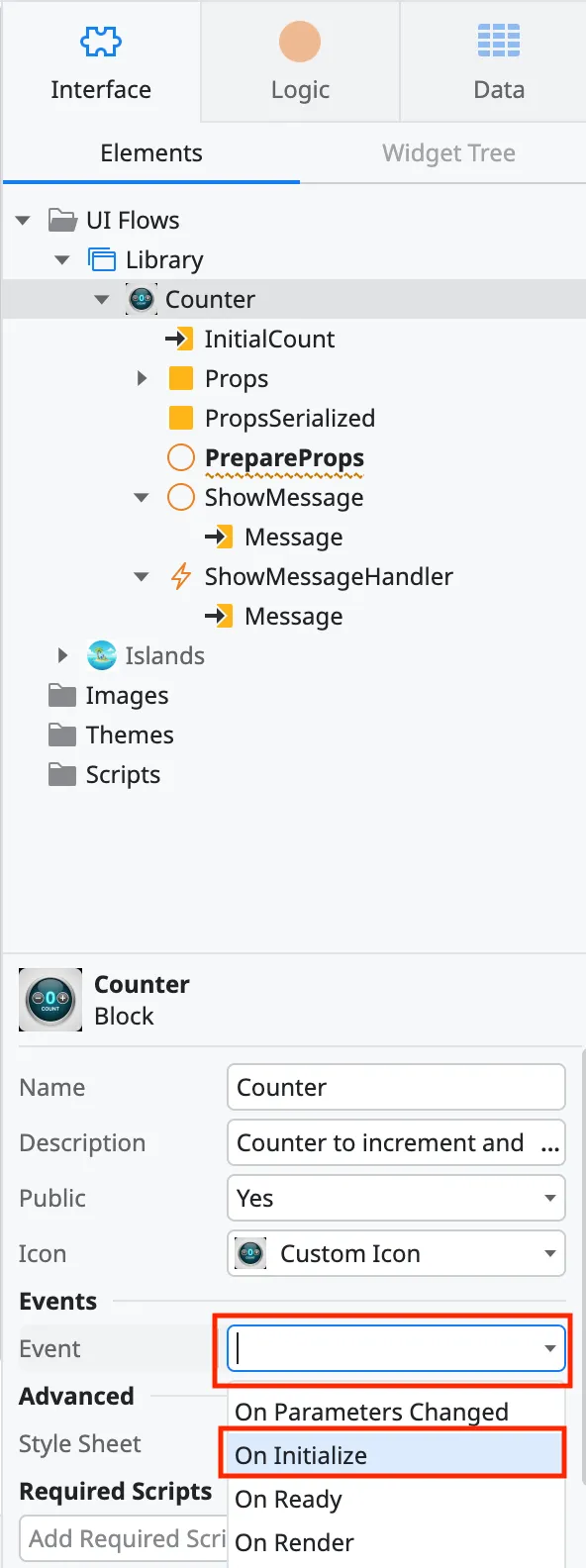
-
Do the same thing for the OnParametersChange handler.
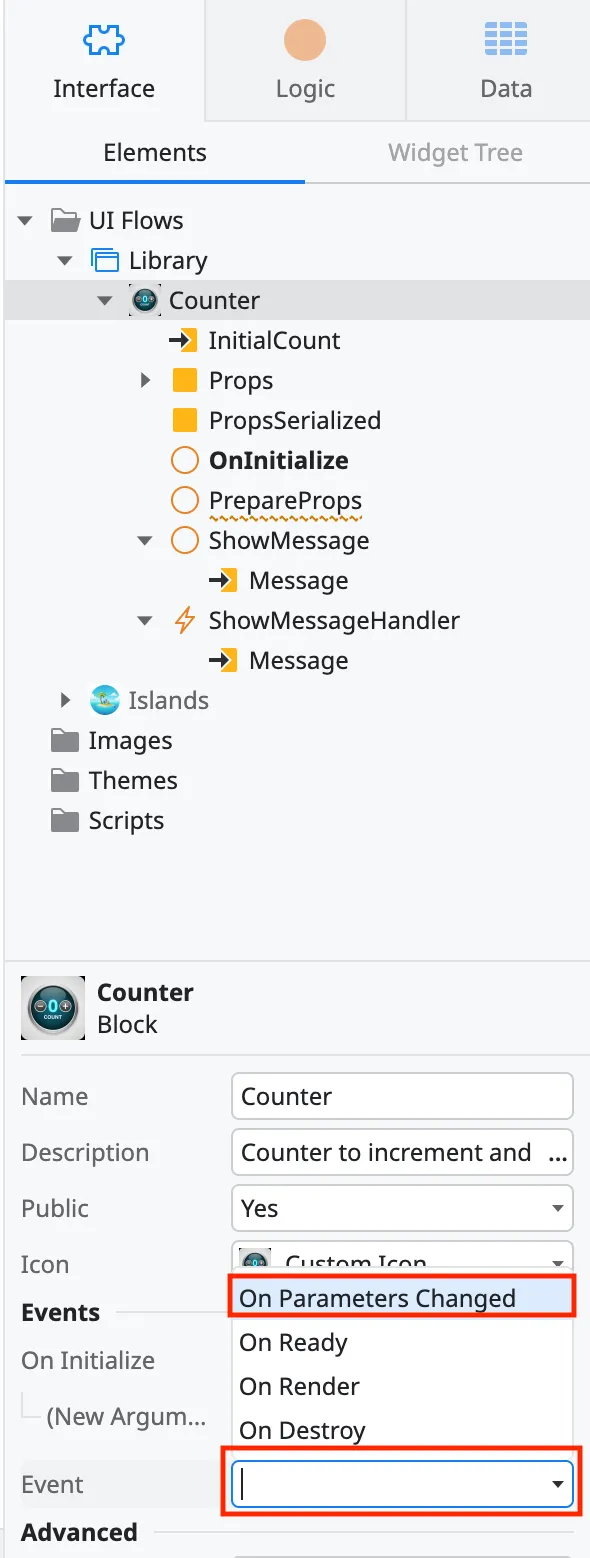
-
Go back to the OnInitialize client action and drag over the created PrepareProps action.
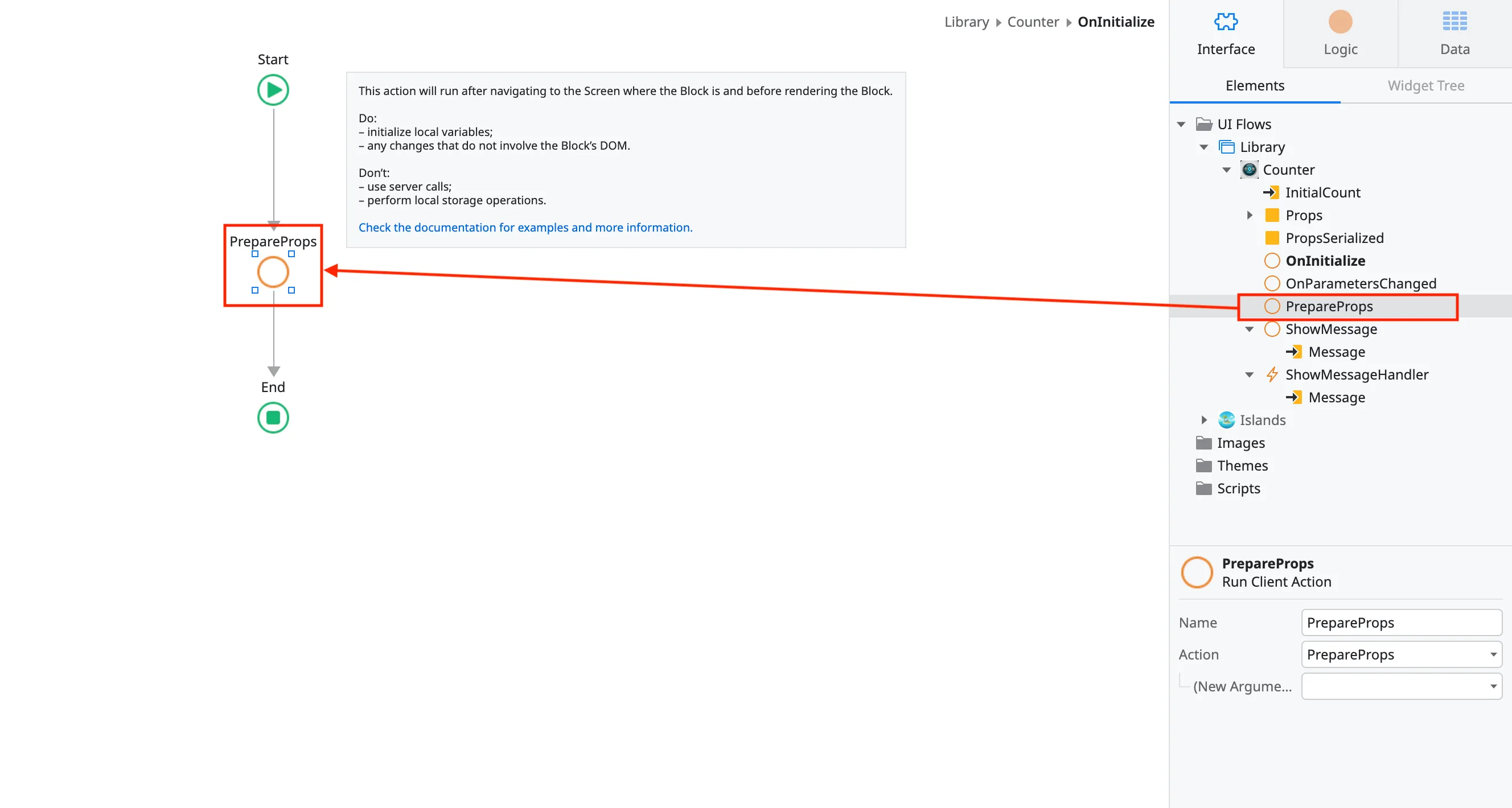
-
Double click the OnParametersChanged and drag over PrepareProps.
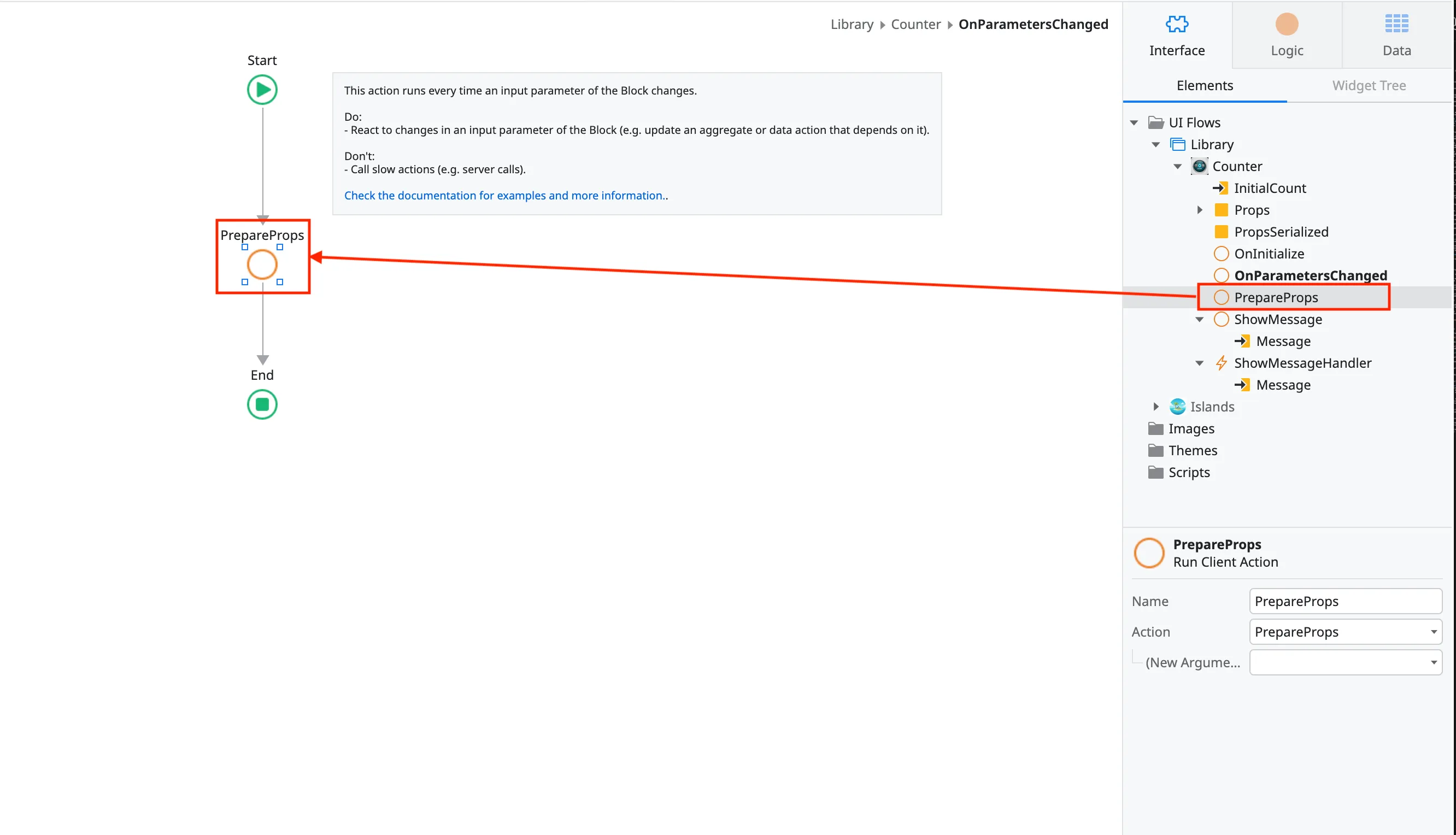
Import scripts and assets
Section titled “Import scripts and assets”Importing JavaScript
Section titled “Importing JavaScript”-
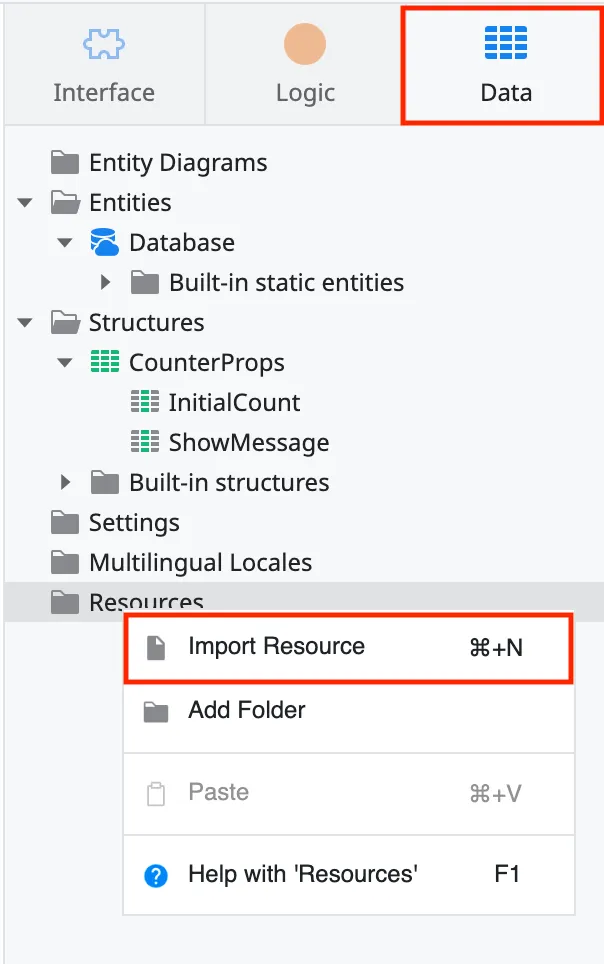
Go to the Data tab in ODC Studio. Right click on the Resources folder and add all of the output JavaScript and other resources.
-
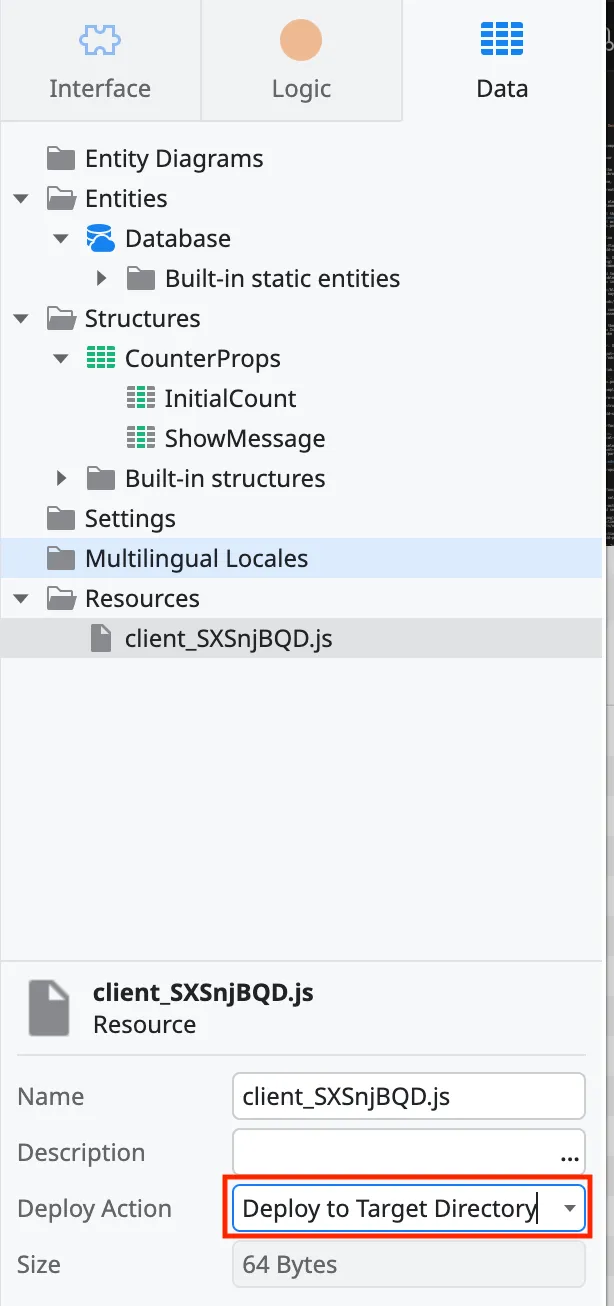
Set the Deploy Action to Deploy to Target Directory.
Importing Images
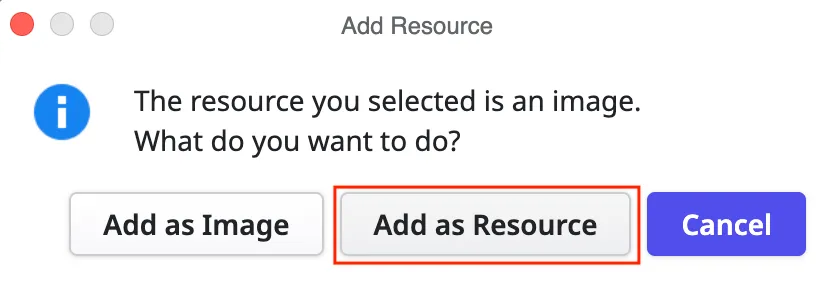
Section titled “Importing Images”- Follow the same process as the JavaScript. You will get a prompt asking if want to add the resource as an Image or a Resource. Click Add as Resource.
Add astro-island component
Section titled “Add astro-island component”-
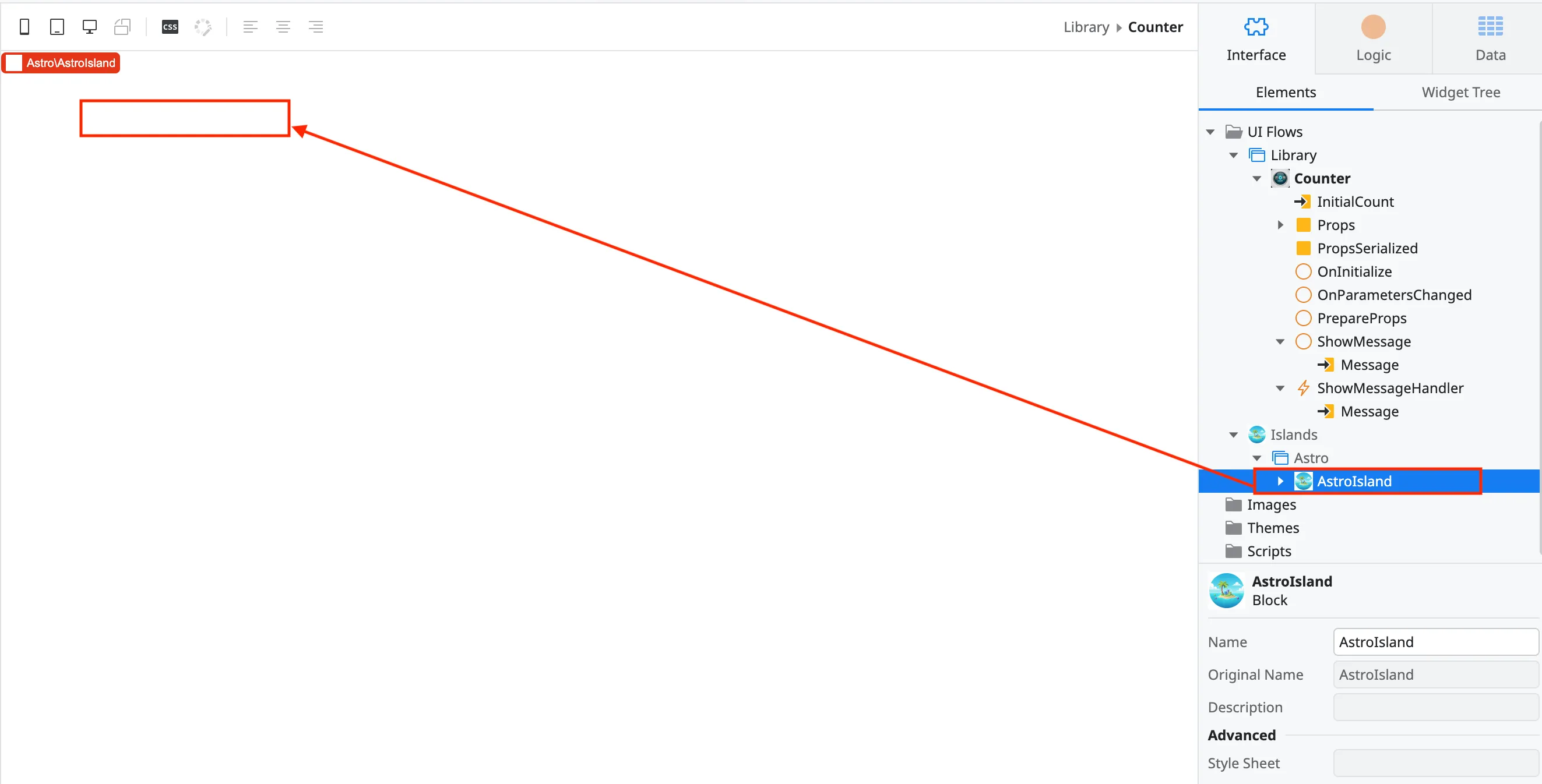
Double click on the block you created. Search for the Astro Island component and drag it onto the screen.
-
Make sure you run the Astro Island component generation in the Node project.
-
Look at the
output/index.htmlfile. It should have theastro-islandcomponent. For example:
<astro-island uid="1GaTnF" component-url="/Counter_A64T-rlf.js" component-export="default" renderer-url="/client_SXSnjBQD.js" props="{""InitialCount"":[0,5],""ShowMessage"":[0,""showMessage""]}" ssr client="only" opts="{""name"":""CounterComponent"",""value"":""react""}"></astro-island>-
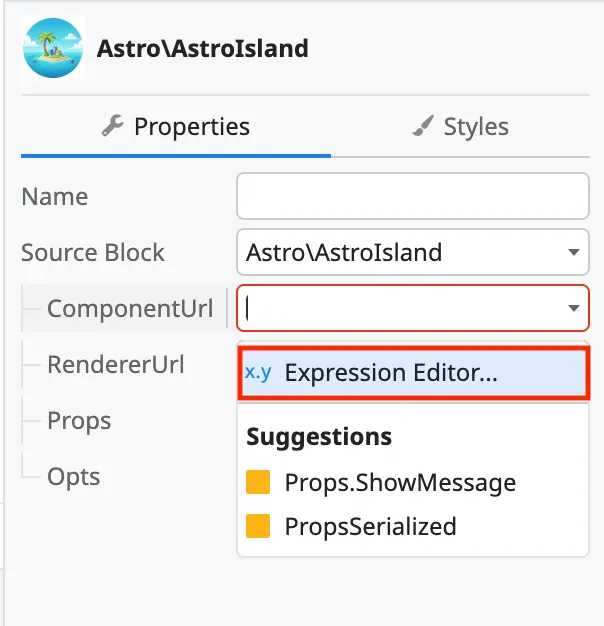
Click on the ComponentURL dropdown and select Expression Editor.
-
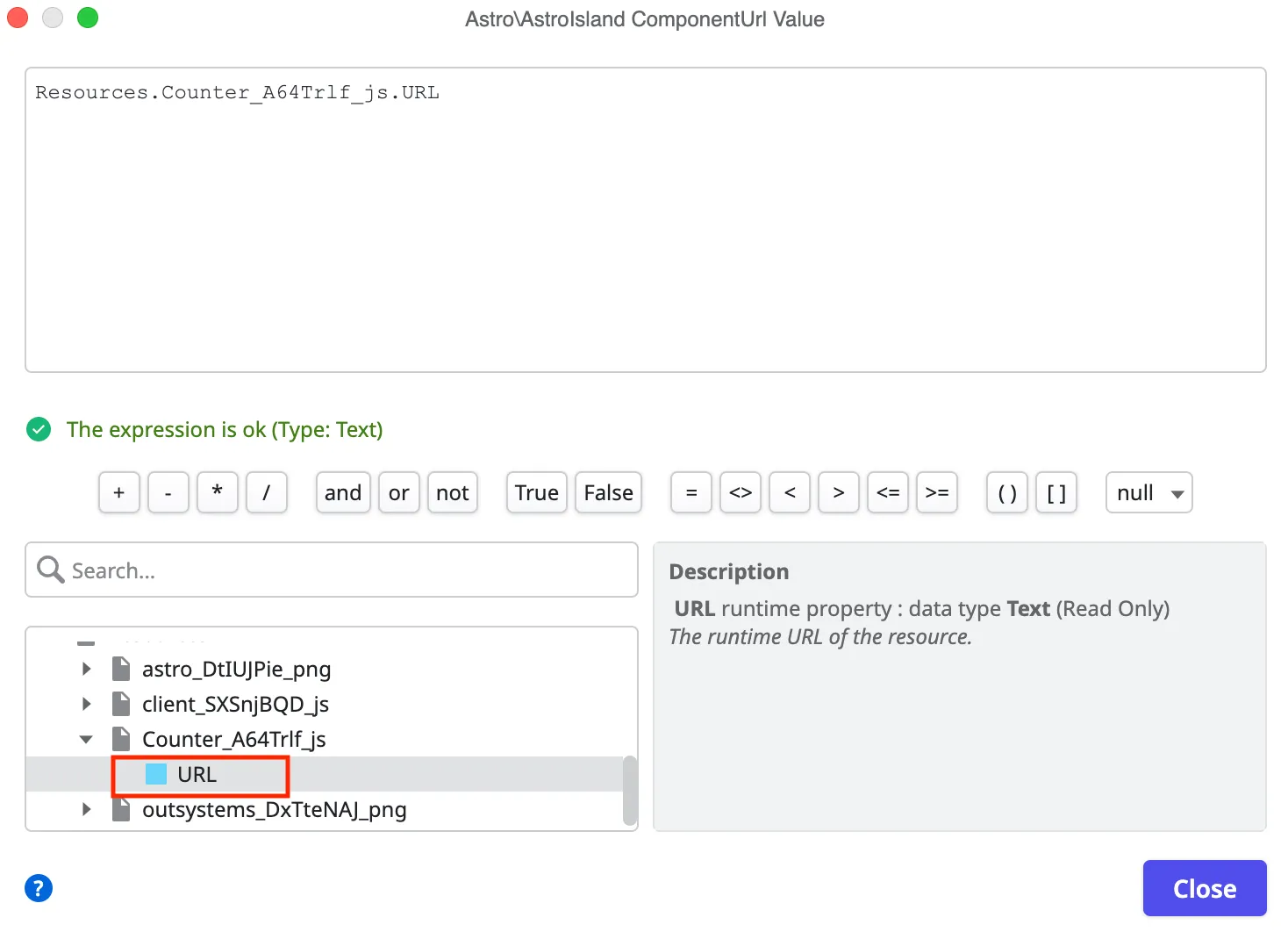
Scroll down in the bottom left section that has the variables until you get to the Resources. Click on the arrow to drop down the resources list. Find the resource that matches the component-url and click on the arrow to drop down more options. The URL variable should be displayed. Double click on the URL and it should populate the window. Once the resource variable is populated, click the Close button.
-
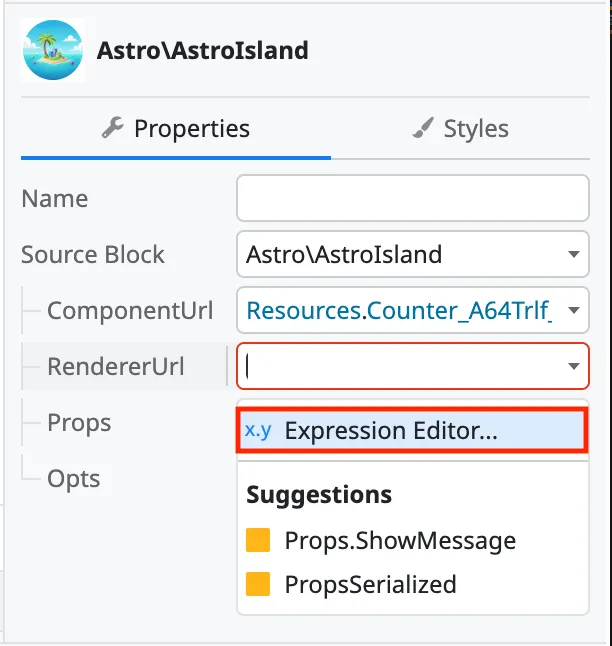
Click on the RendererURL dropdown and select Expression Editor.
-
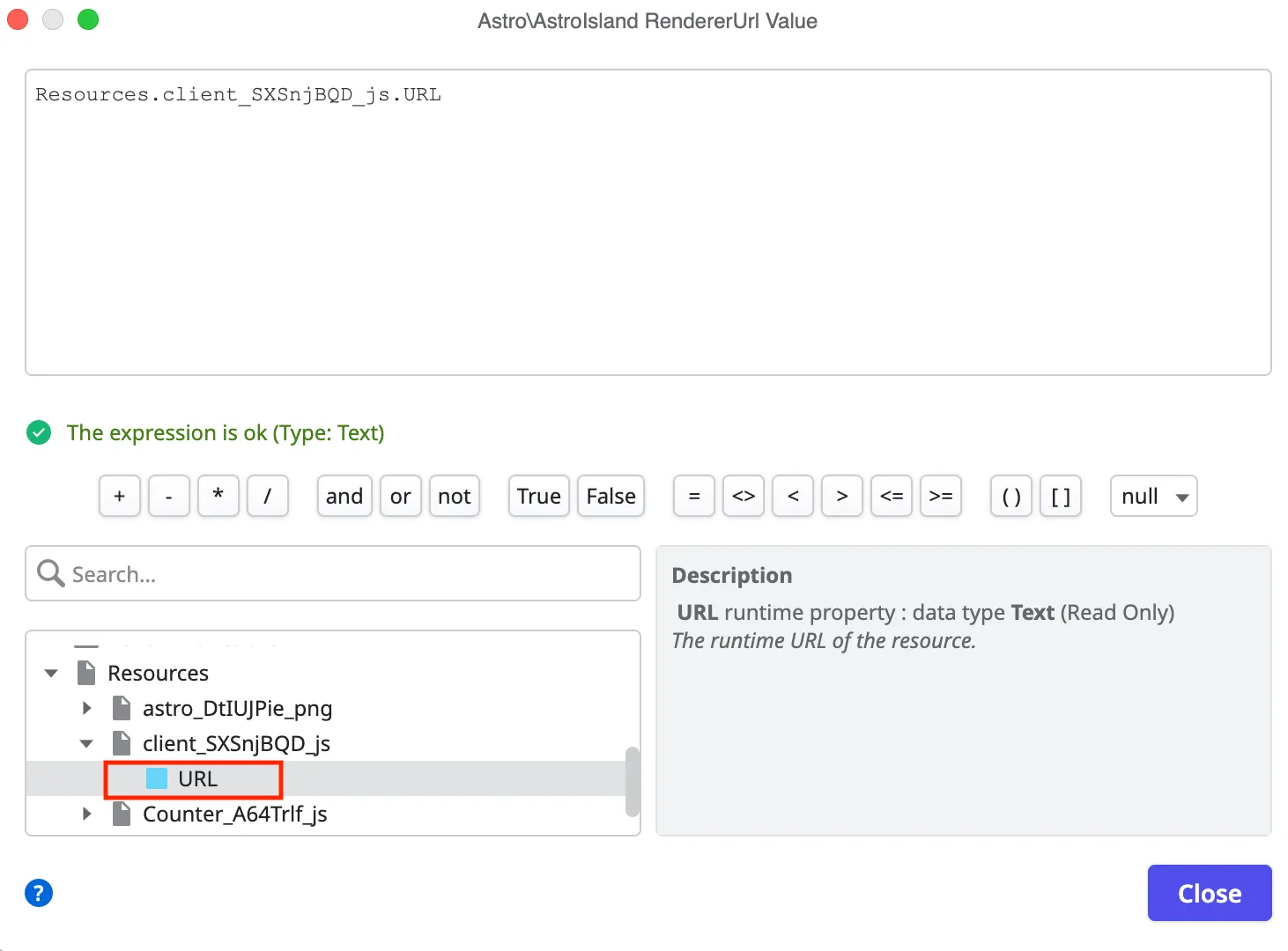
Scroll down in the bottom left section that has the variables until you get to the Resources. Click on the arrow to drop down the resources list. Find the resource that matches the renderer-url and click on the arrow to drop down more options. The URL variable should be displayed. Double click on the URL and it should populate the window. Once the resource variable is populated, click the Close button.
-
Click on the Props dropdown and select
PropsSerialized.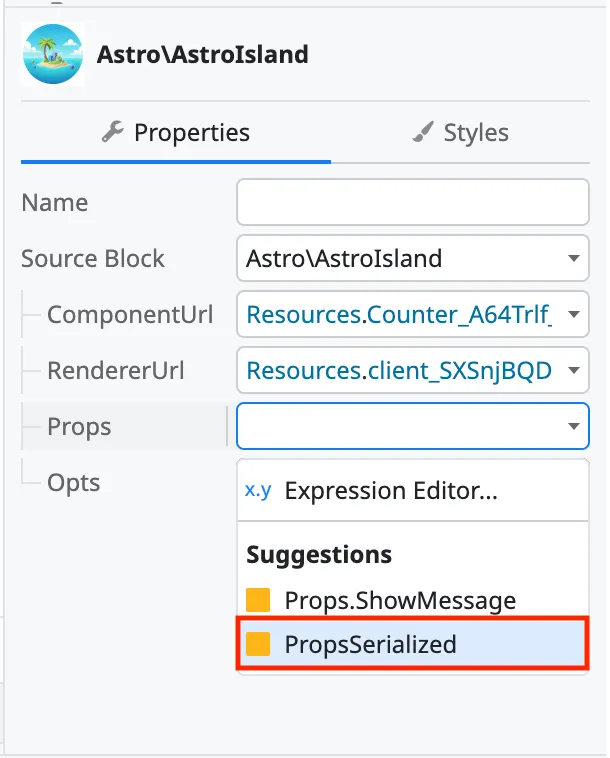
-
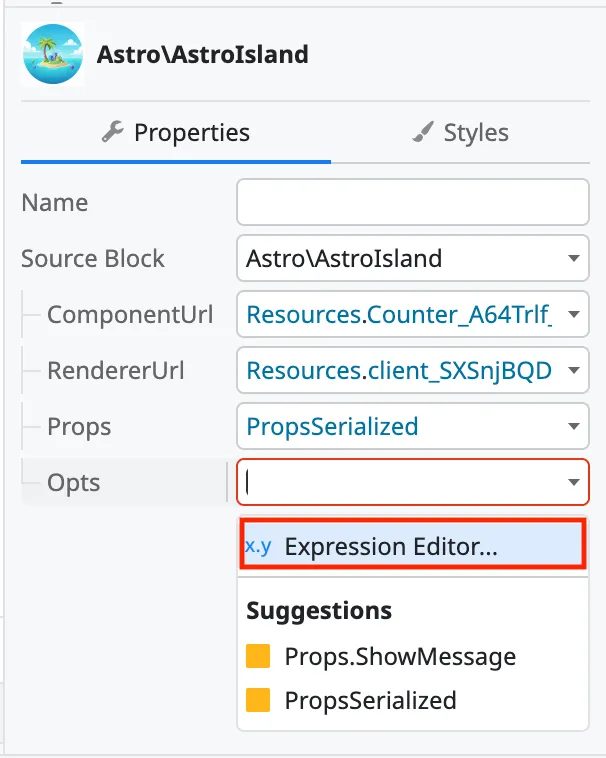
Click on the Opts dropdown and select Expression Editor.
-
Enter the value from the
astro-islandoptsparameter into the window and click the Close button.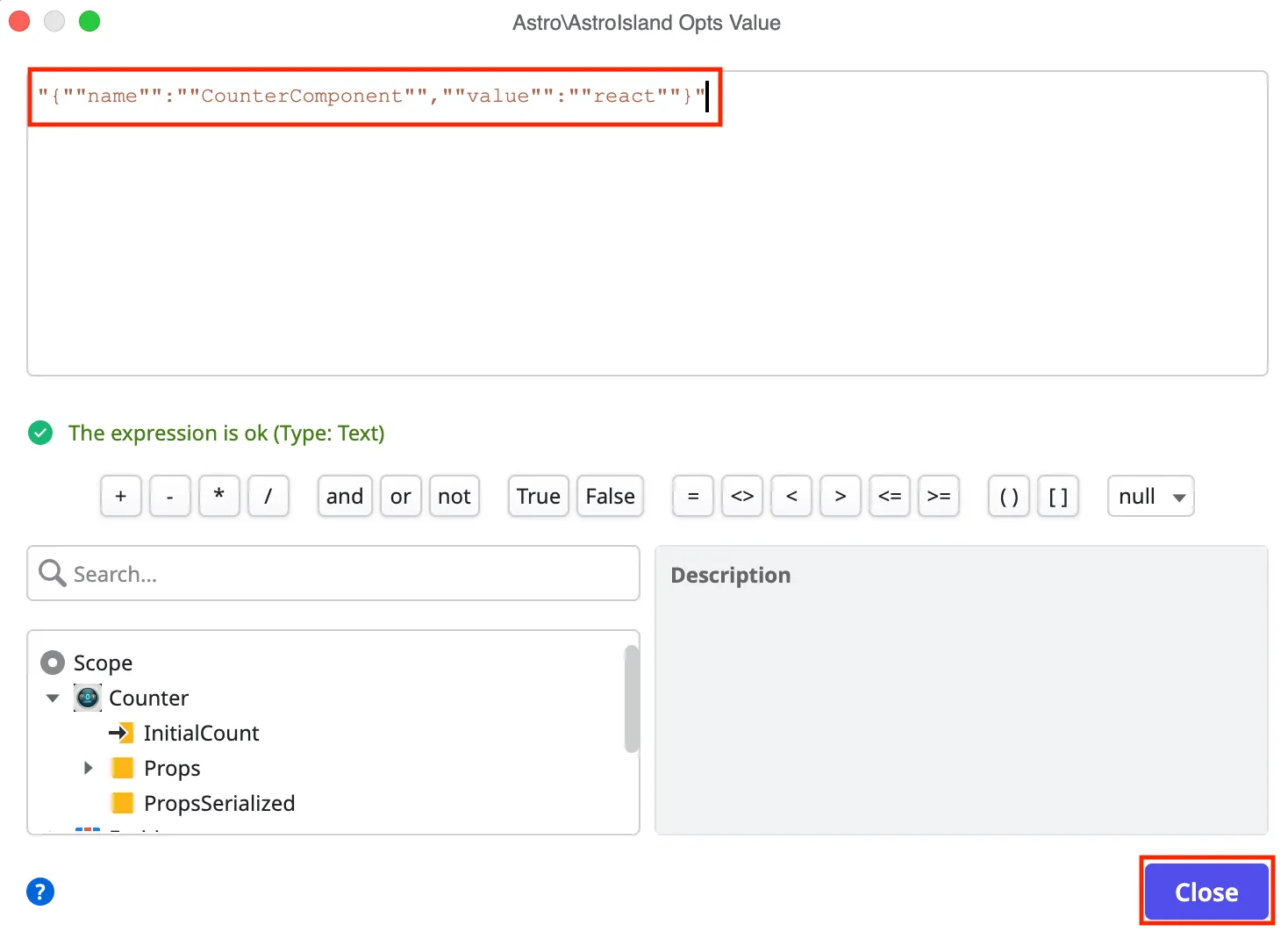
Add styles
Section titled “Add styles”If there are any output CSS styles, they must be added to the block CSS.
-
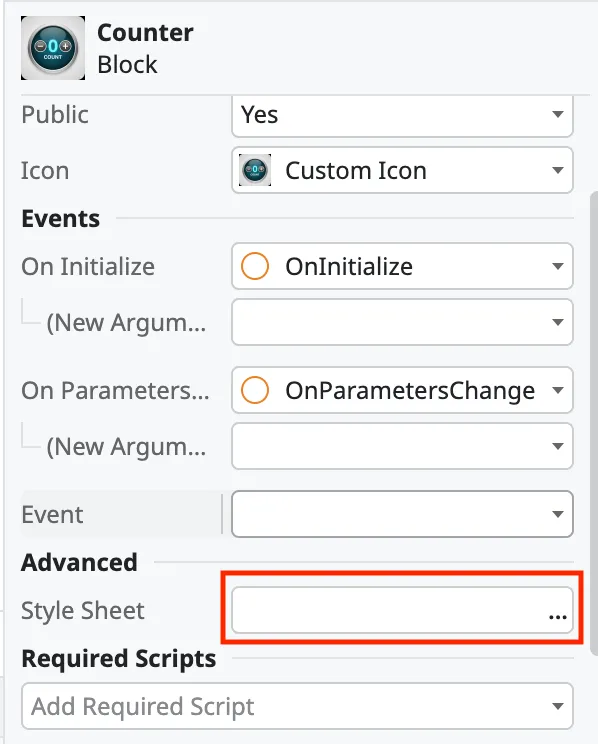
Click on the block. Scroll down in the properties to Advanced -> Stylesheet and click the three dots on the input.
-
Enter any styles that are in an output
.CSSstylesheet file.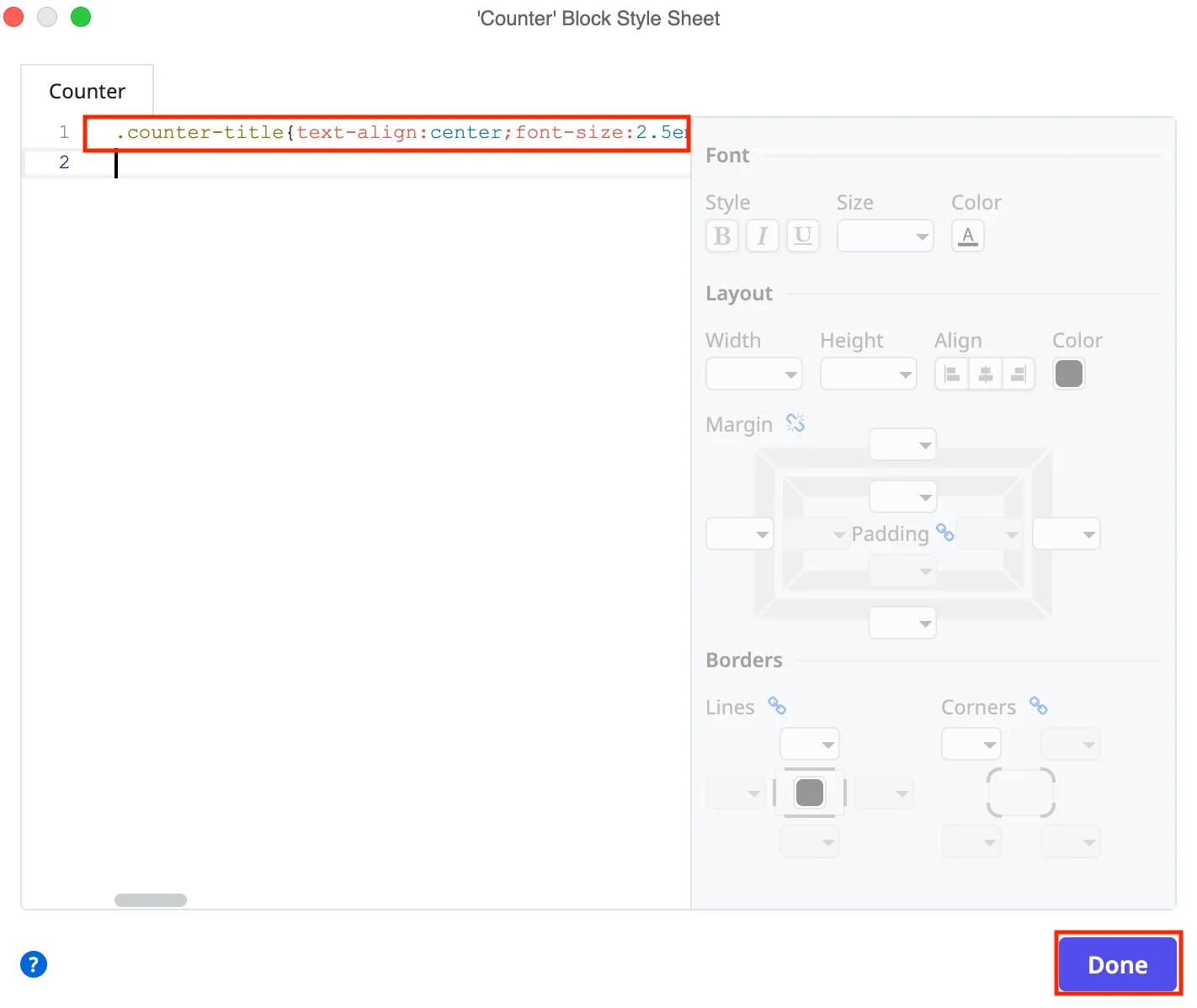
Optional: Create a visual representation
Section titled “Optional: Create a visual representation”Since this is a JavaScript rendered element, nothing will appear in OutSystems Service Studio preview. Through the widget tree, you can create a visual representation of what your component will look like.
-
In your component library, click on the component and select the Widget Tree.
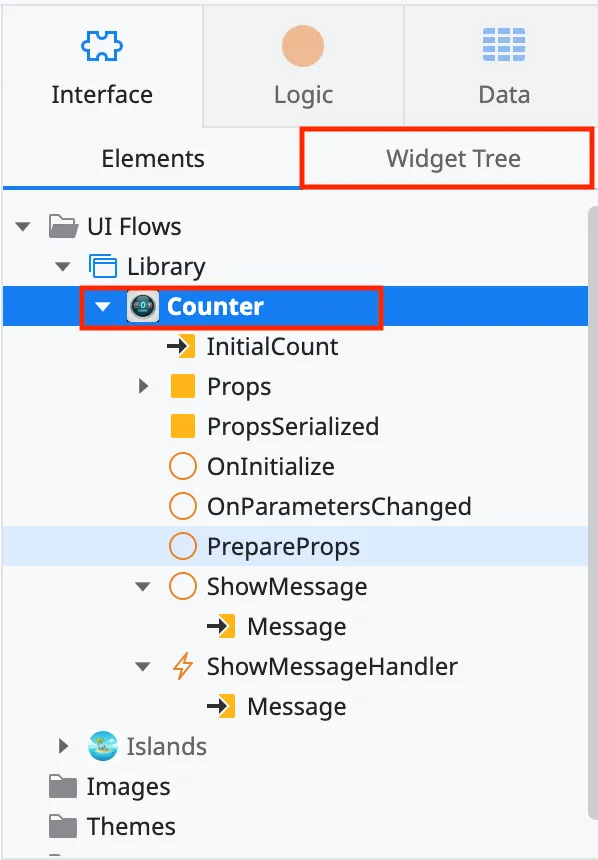
-
Right click on the elements and click Enclose in If.
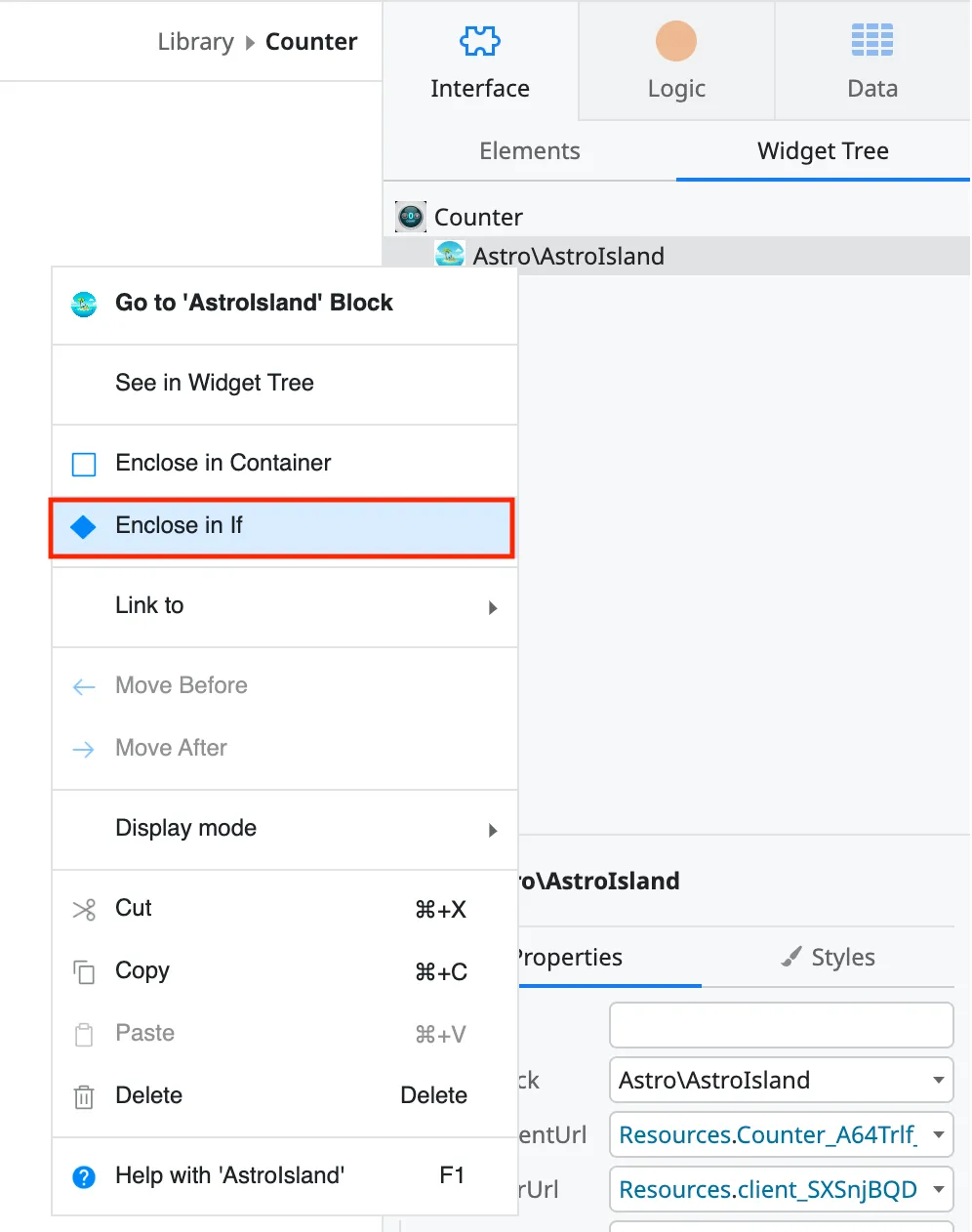
-
Click on the If element and set the Condition to
False. You can rename the If condition to make it easier to recognize the logic.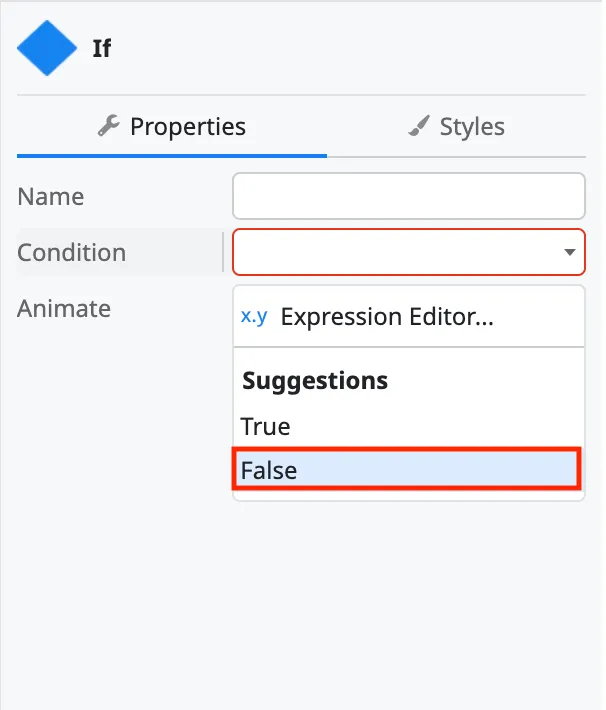
-
The False branch will contain your component. You will have to drag it over from the True branch if its is in there. The True branch will contain your visual representation. The True branch will only show in ODC Studio.
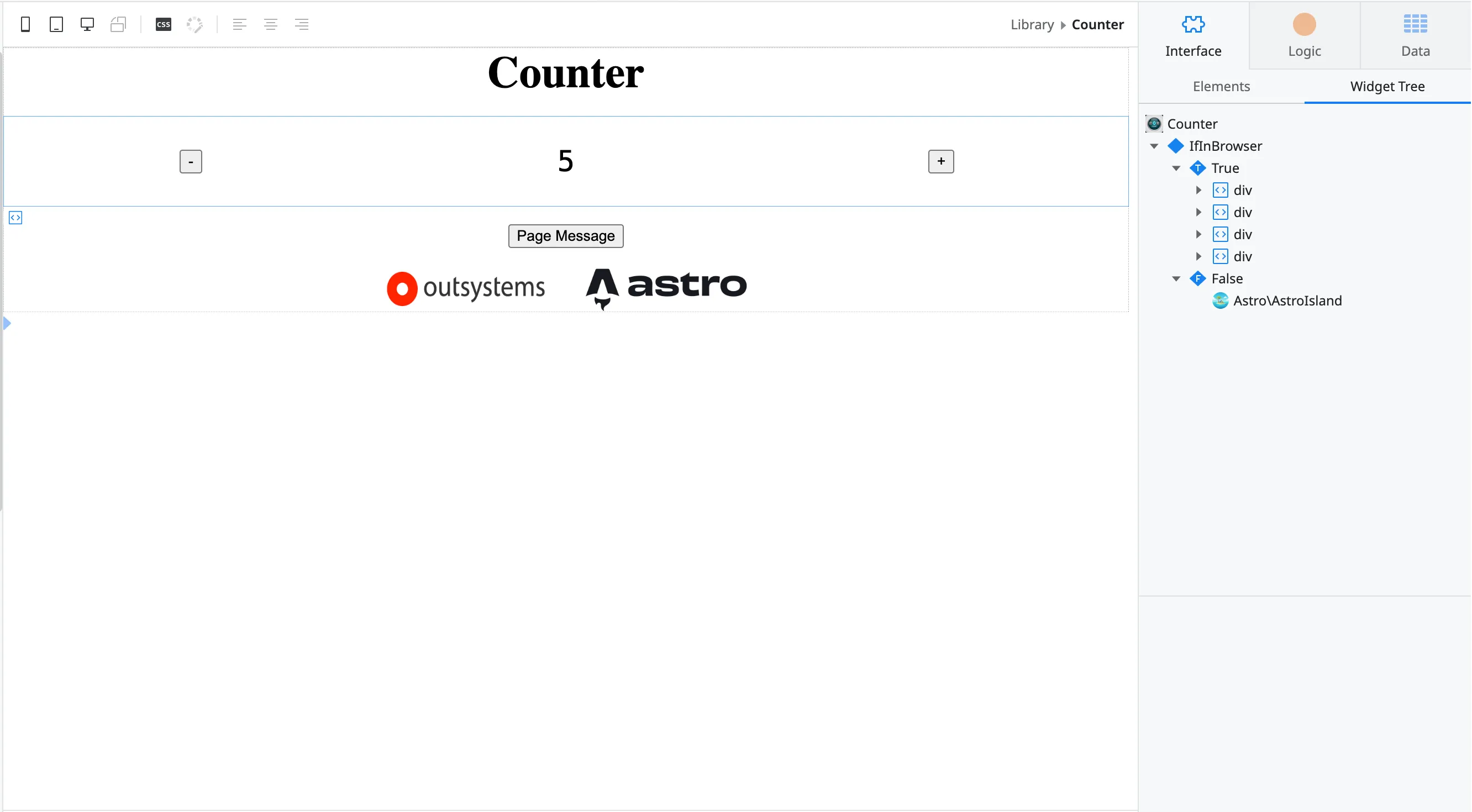
-
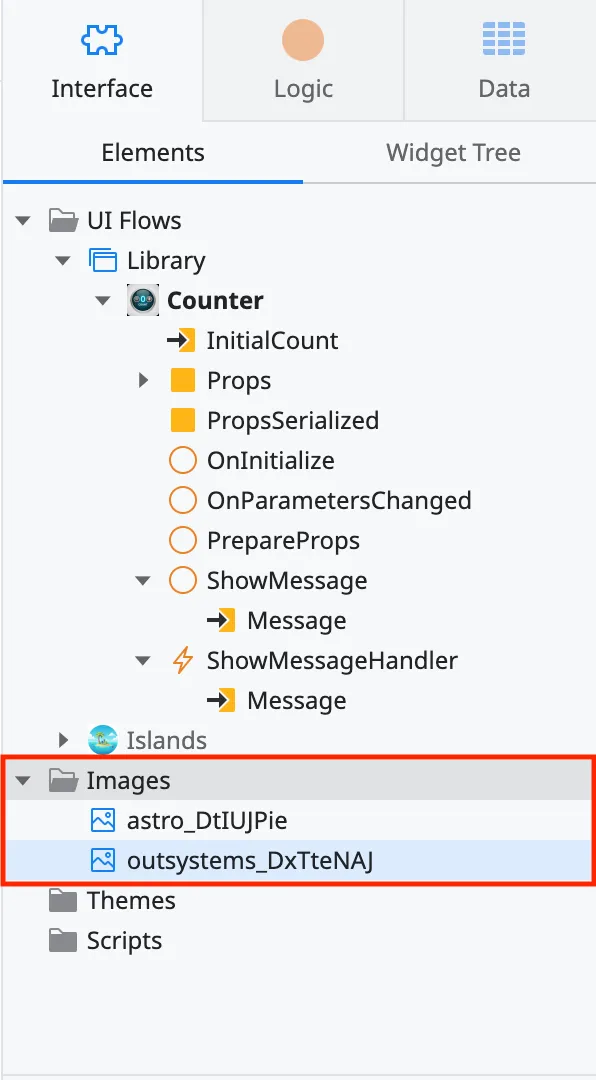
If you have any images you want shown in the visual representation, you have to import them in to the images folder (even if you previously imported them as resources). Right click on the Images folder and say Add Image. Then select and upload your images.
Publish
Section titled “Publish”Make sure to publish your component.
Import the component into your application
Section titled “Import the component into your application”If you have created a library you can now import it into your application.